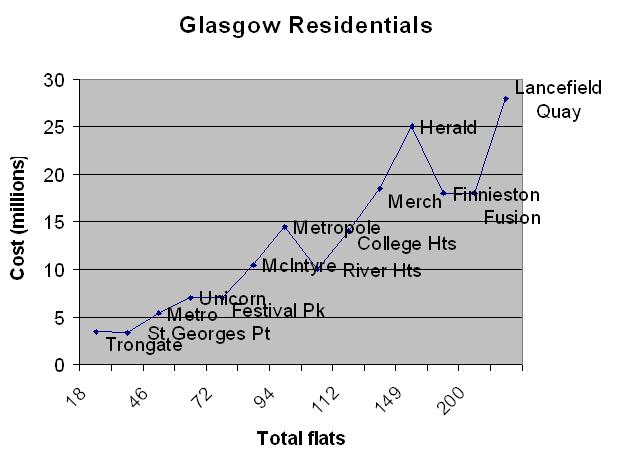
Distribution of planned commercial residentials shows displacement to the south and west of the city centre, central densities will need to be upped considerably going forward if they are to fufill the sectors status as lead growth area and compete with inner city areas and their richer land banks. Interestingly volume of Non suburban market led residentials covered (as of 09/06/06) stands at ~2,300 U/C with a further ~9,000 in the pipeline.
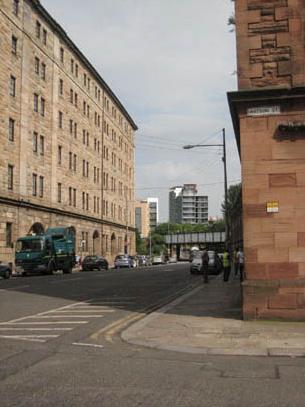
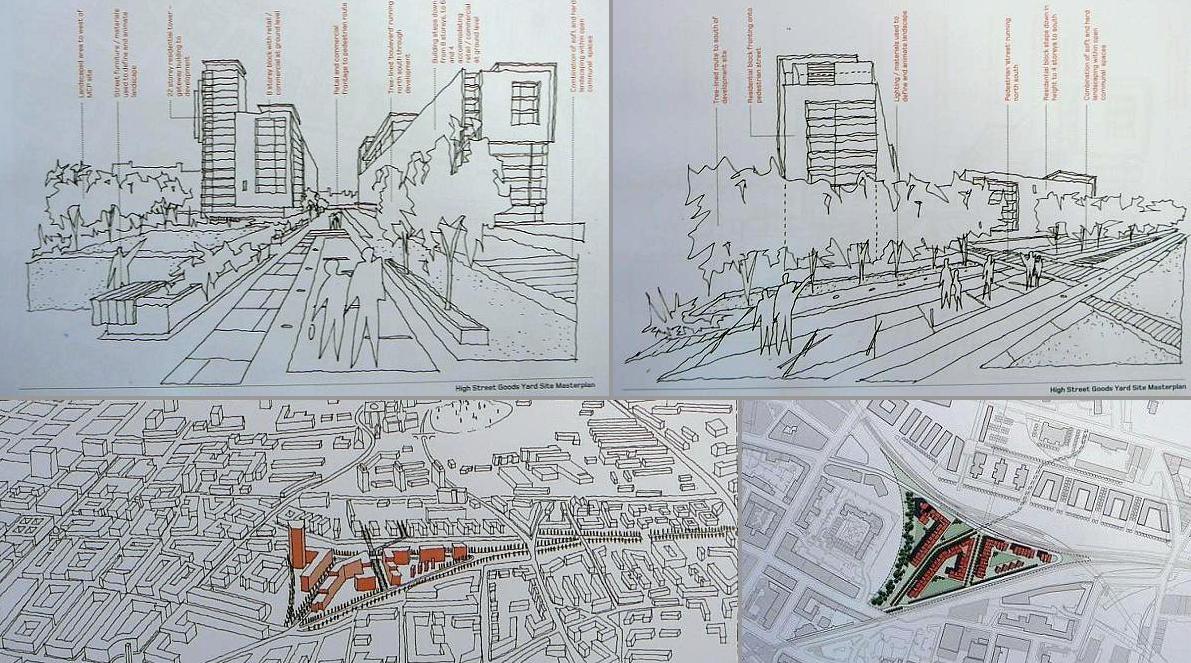
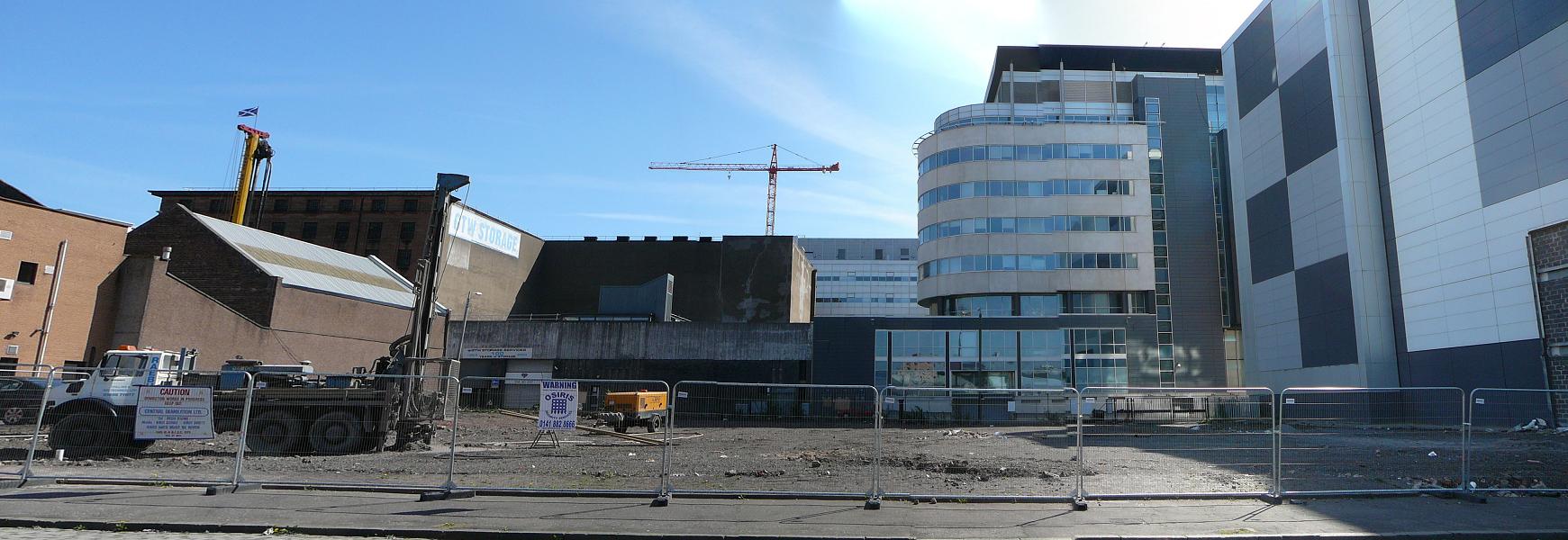
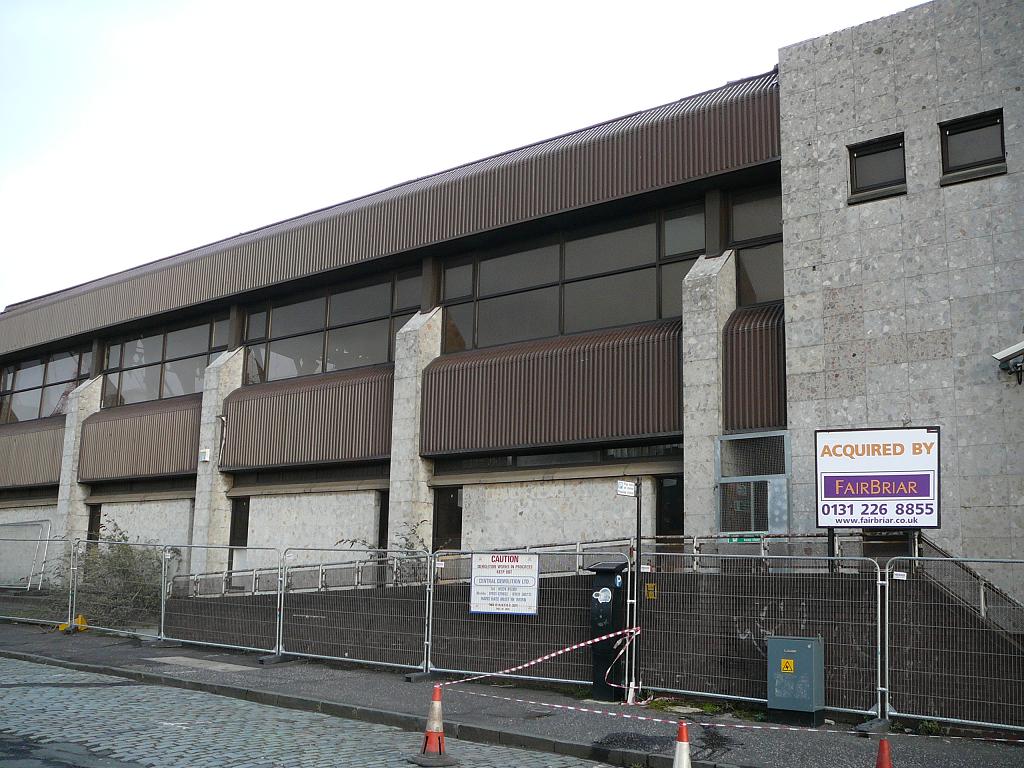
Location - Former College goods yard, bounded by High Street station and Crossrail, terminating Ingram Street
Status - Seeking masterplan approval
Start date - n/a
Completion date - n/a
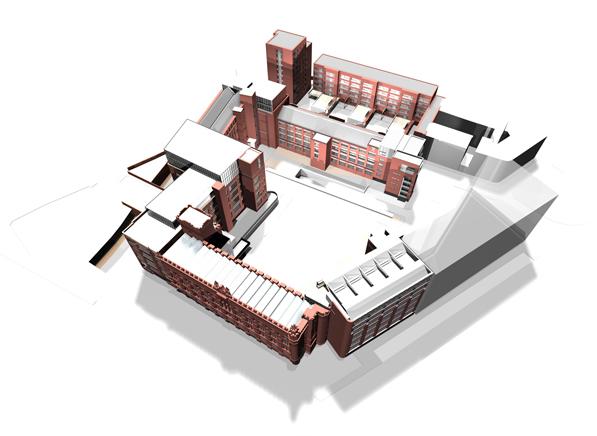
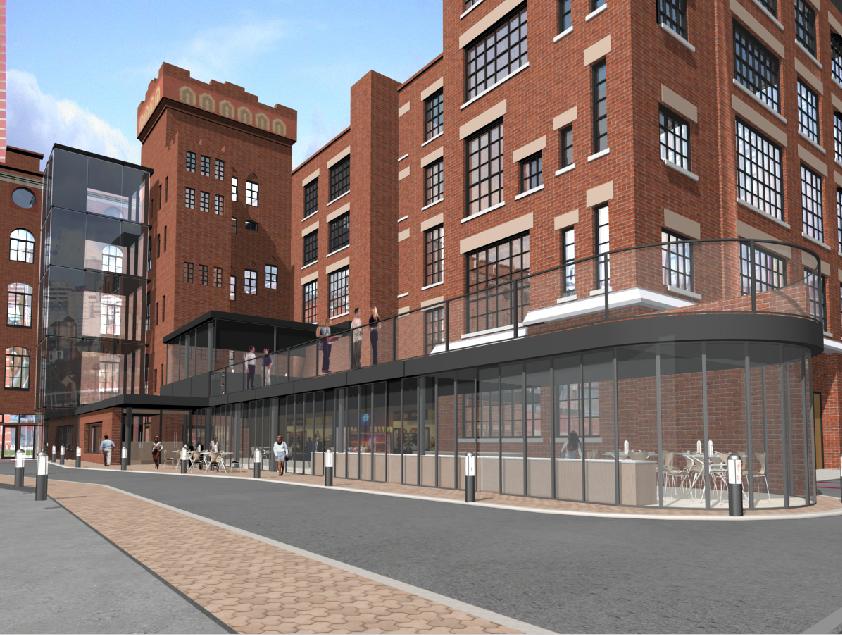
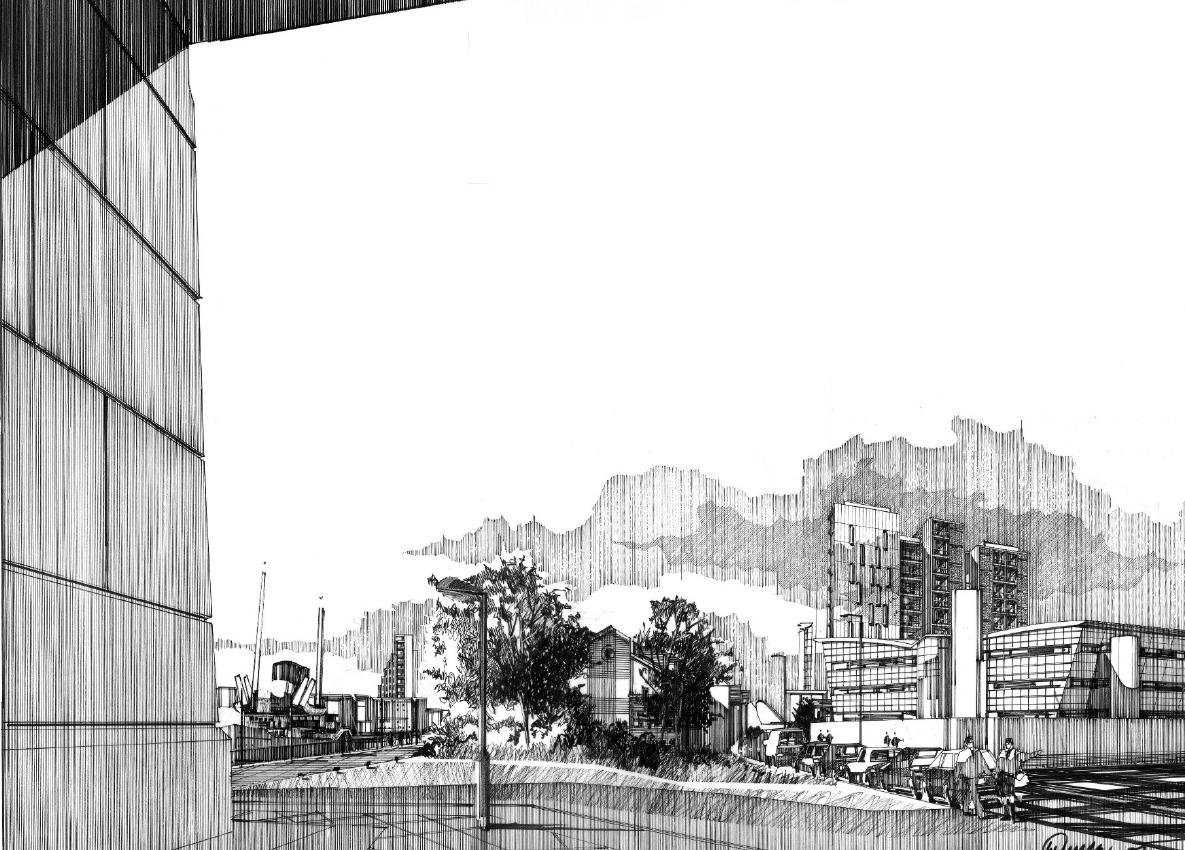
The continuation of Ingram Street marks main entry to the site, a triangle of lands adjacent to Collegelands and enclosed by railway expansion. Awkward terrain is mitigated by investment in roads and footpath infrastructure. Architecture is as yet still subject to design but it is proposed to create a series of "figurative object" buildings culminating in the gateway tower set against more traditional building blocks. Internal streetscape is well thought out with ground floor commercial outlets fronting a green boulevard with the Molendinar burn bridged over. Densities decrease to western plots where urban garden townhouses will be built with access to private gardens.
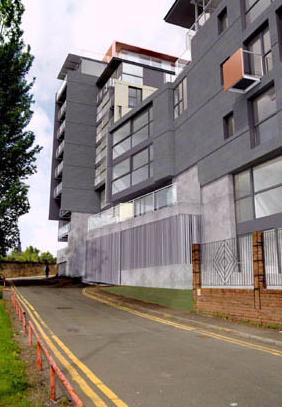
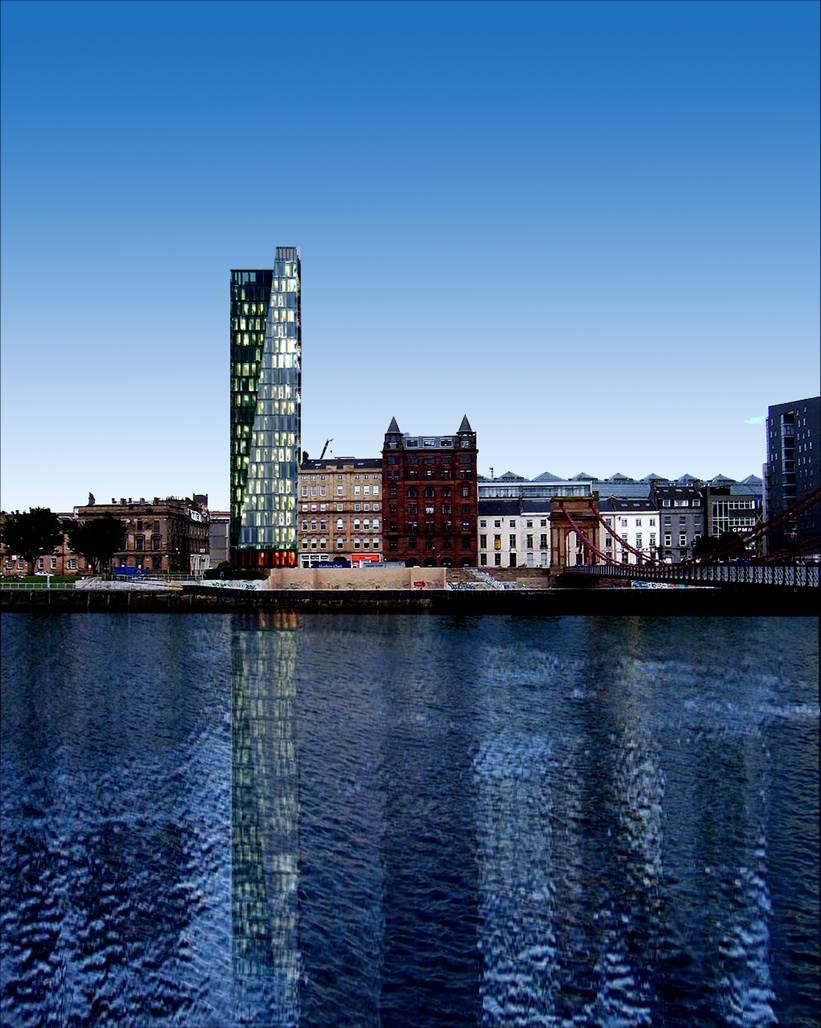
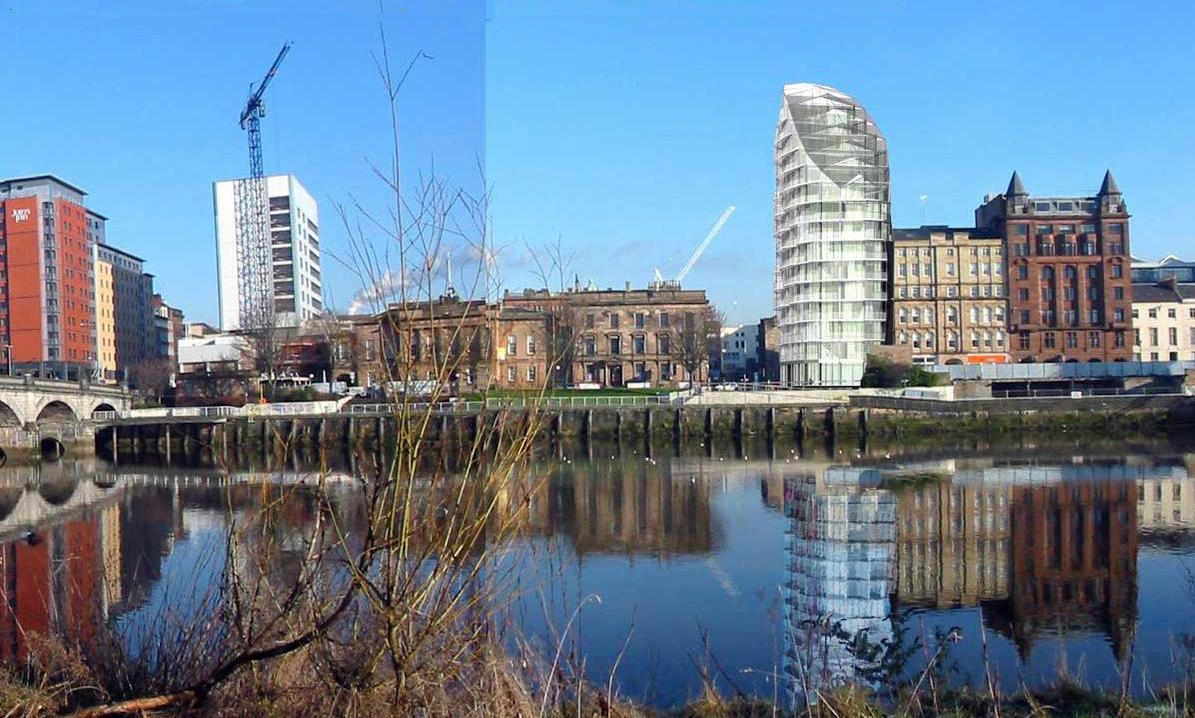
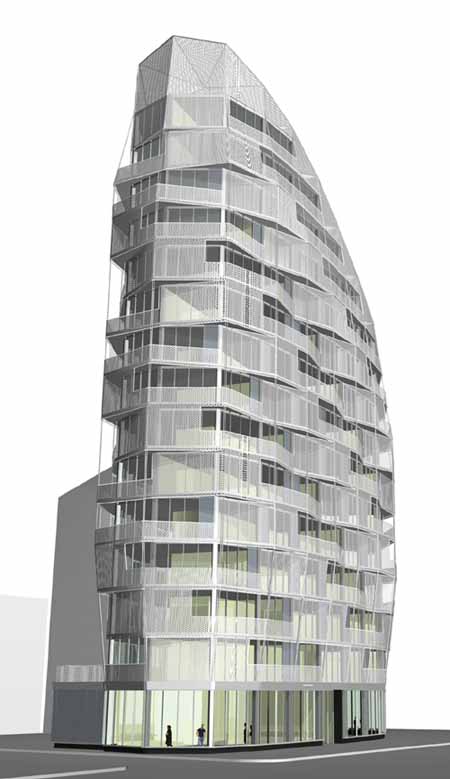
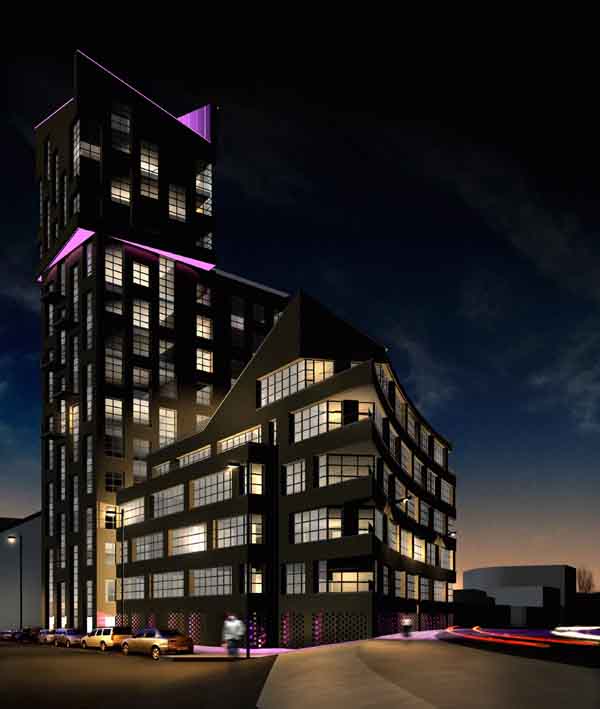
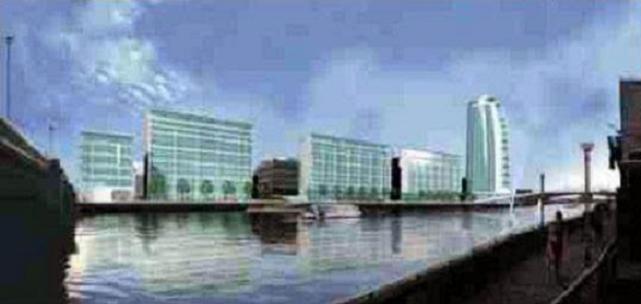
Taking a 13 degree deviation from true north of Glasgow's grid pattern as their cue (thought to originate from the use of magnetic compasses rather than astronomy when Glasgow's streets were layed), RMJM have devised a series of concepts to play with this angle for a new housing development one of which ingeniously exposing southerly aspect to a proportion of North facing flats. Tight geography affords slender profile abetted by welcome height extension competing for presence alongside Custom House Quay. It supercedes Page and Park's 43 home, 15 floor, 51.5m bee hive an interesting concoction of Stainless steel perforated sheets, glass and red sandstone.
Materials - Black and grey carea cladding system, curtain wall glazing
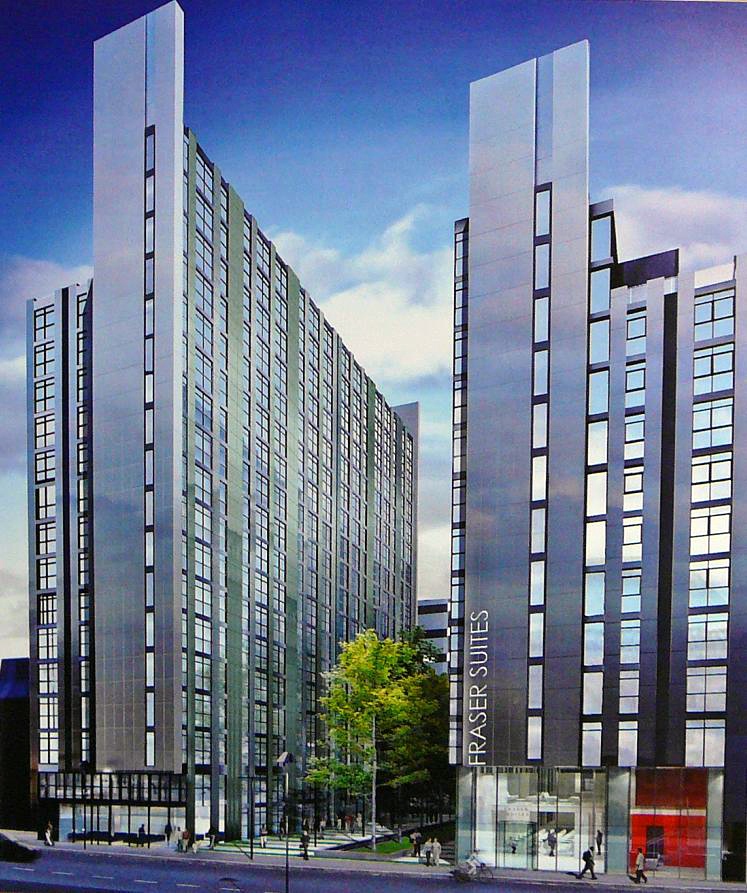
Height - 18 & 14floors
Total flats - 192 (north) 135 (south)
Cost - £30m
Location - 12-30 Carrick St & Brown St
Status -
Start date -
Completion date - 2011
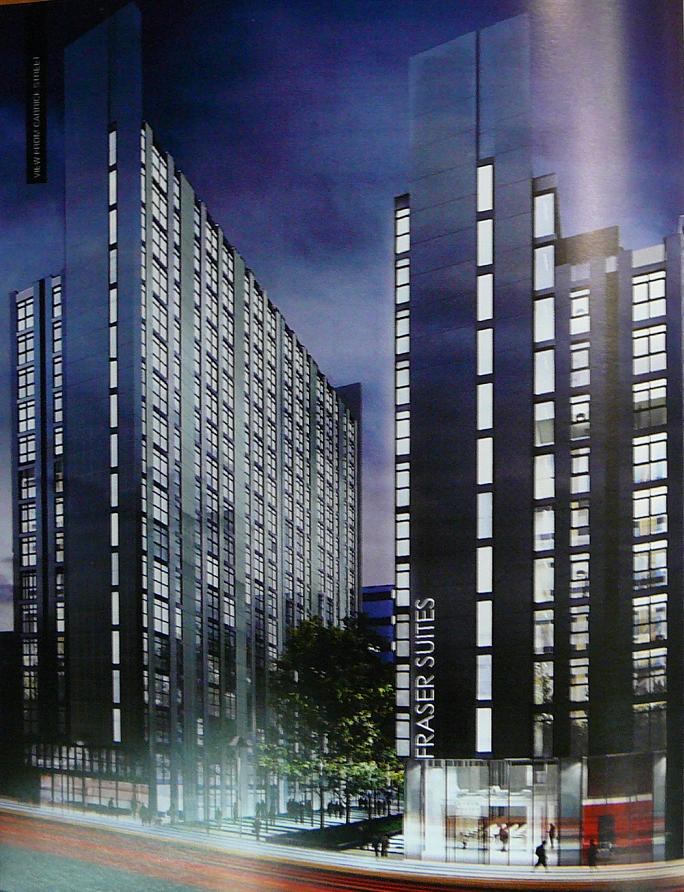
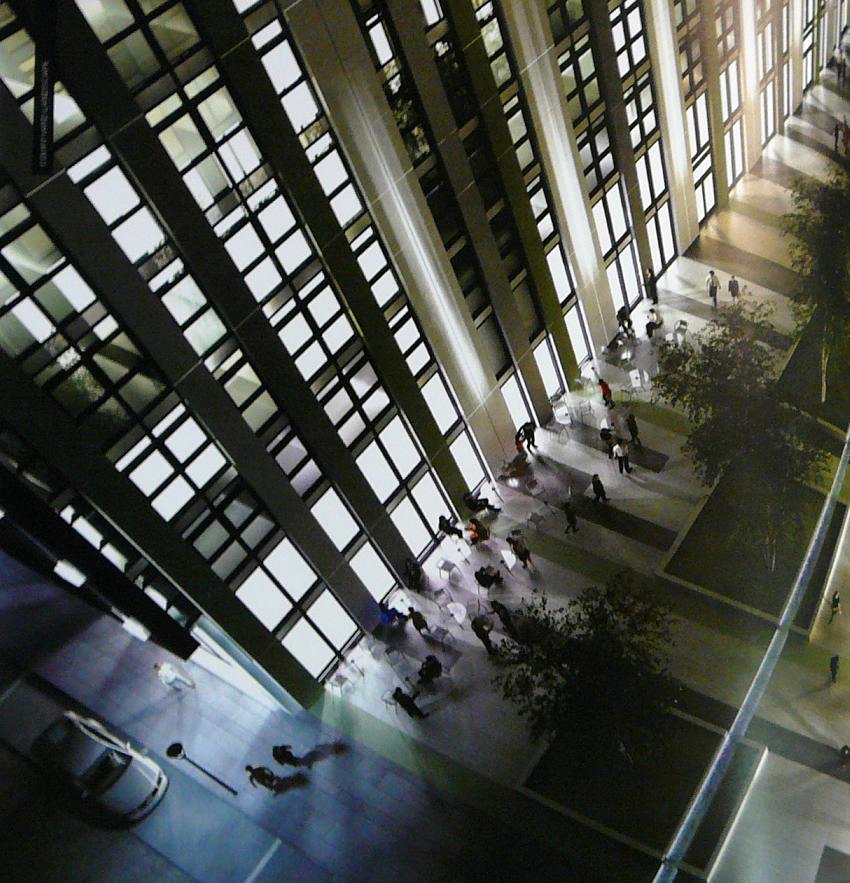
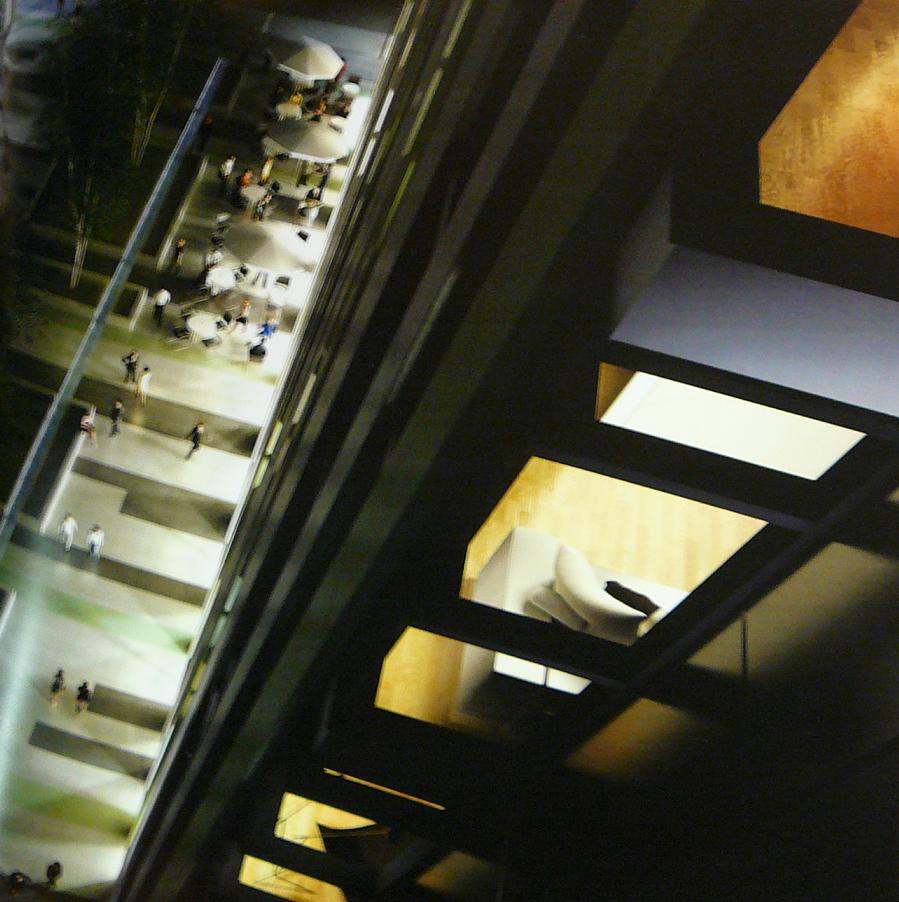
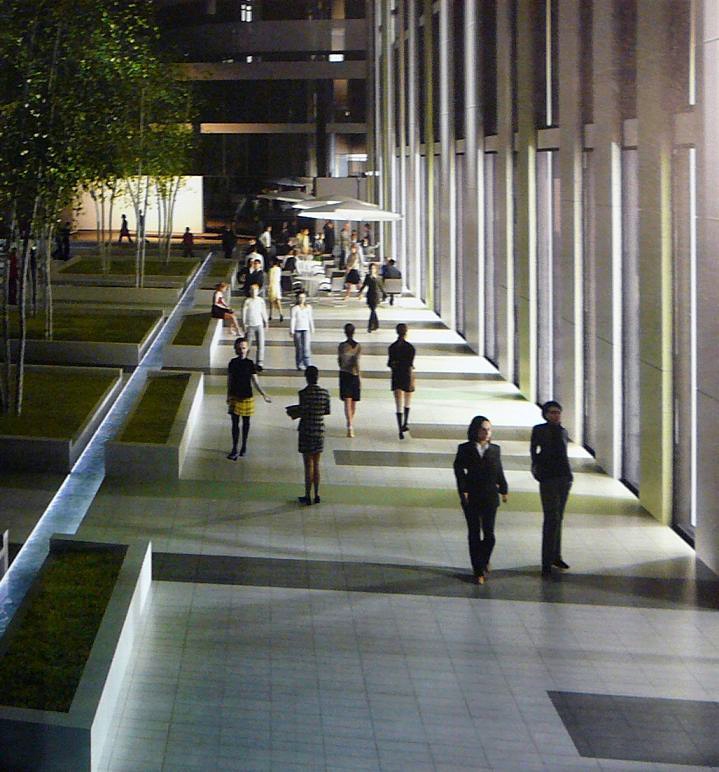
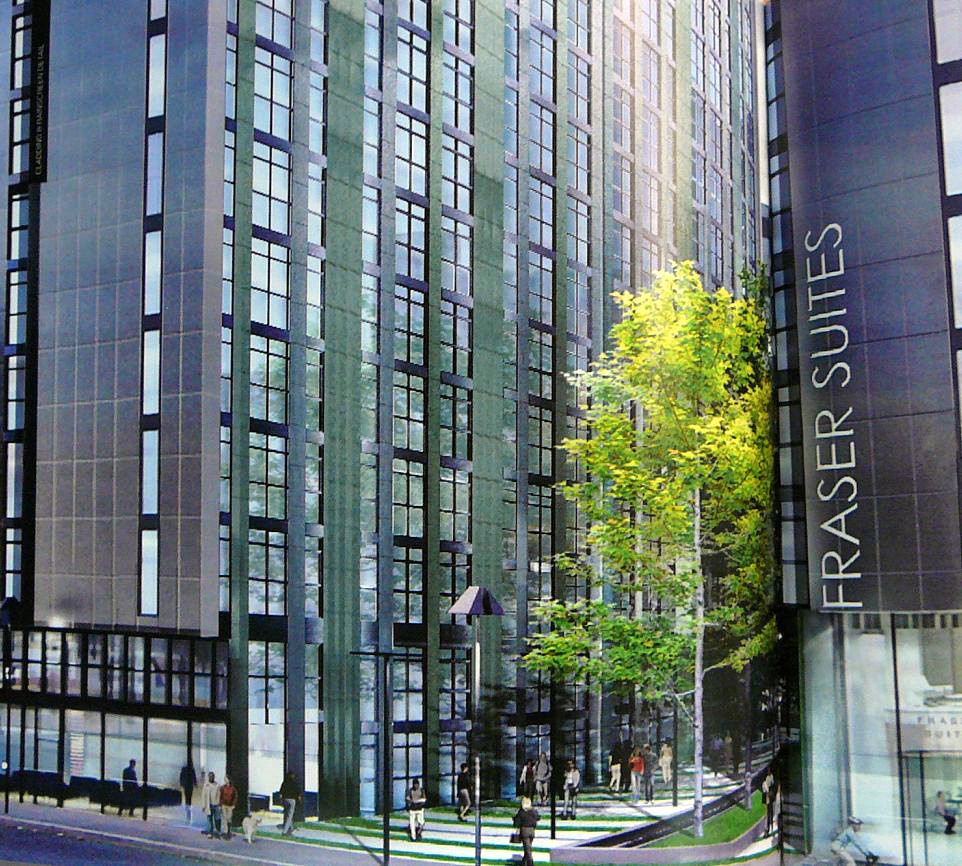
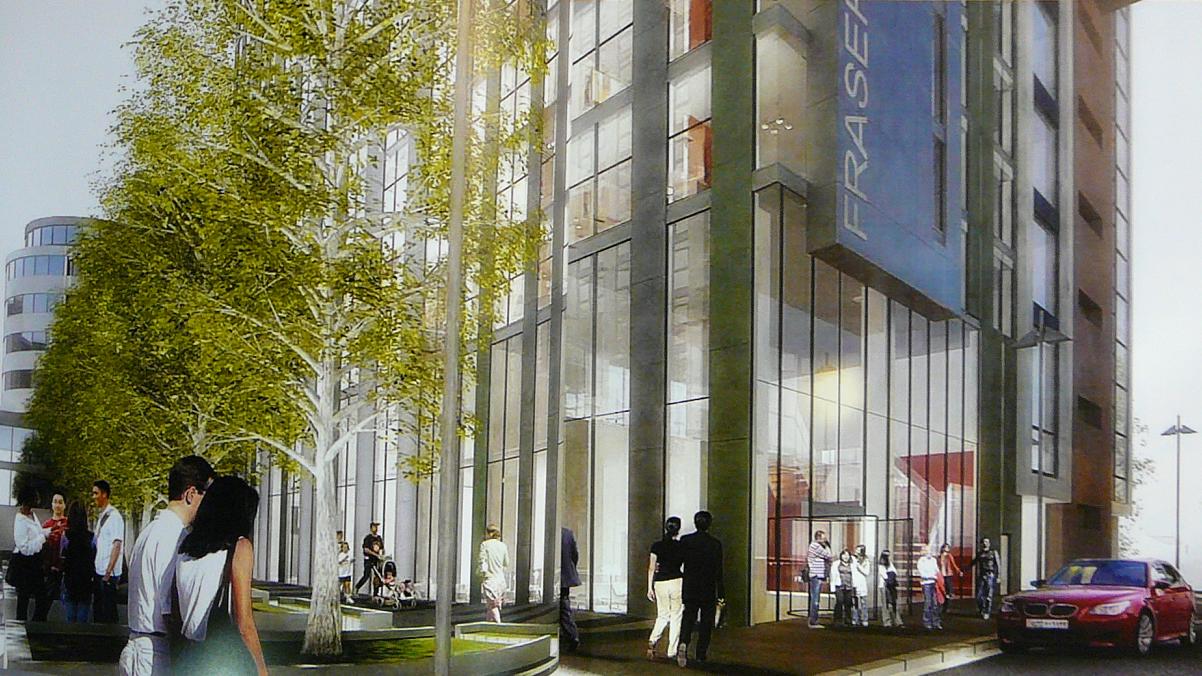
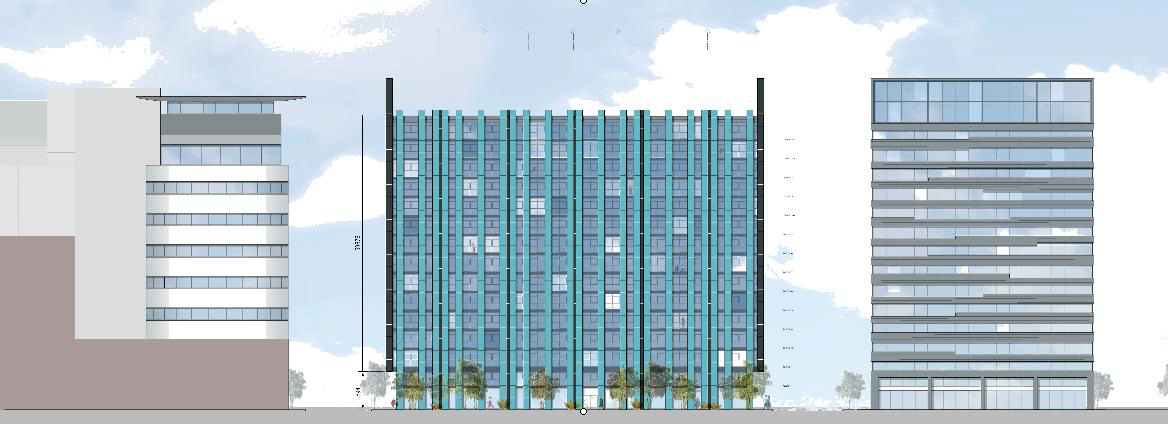
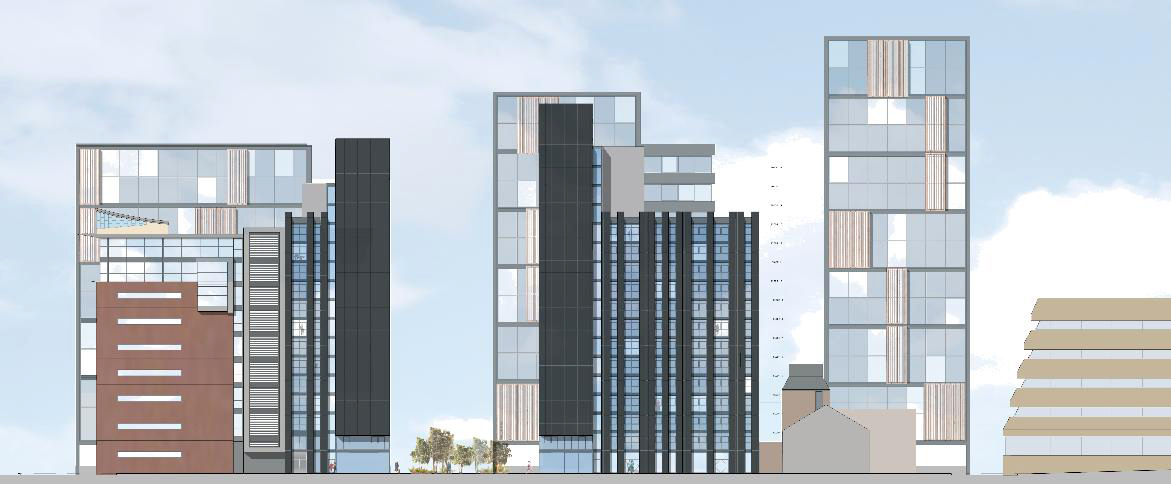
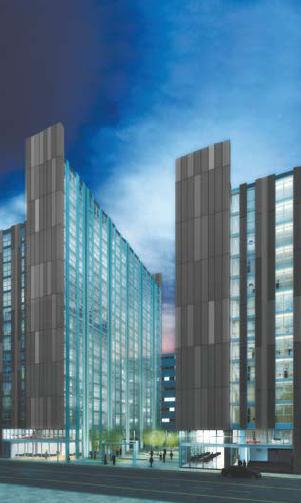
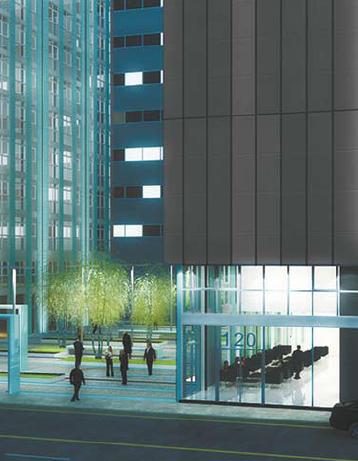
Duo forms part of a UK expansion drive from Frasers Property, the development arm of Singapore conglomerate Fraser & Neave. Private and serviced dwellings form around two buildings of unified design, these cantilever out over adjacent roads and increase in height from south to north. Green ribbons extend down the elevations and across the courtyard to integrate the elements around shared public realm. This is treated as an external room with trees, bands of soft planting and an external water feature, all of which contributes to a continuous public route from Jamaica Street through the IFSD.
Commercial functions populate ground floor areas and basement parking is provided.
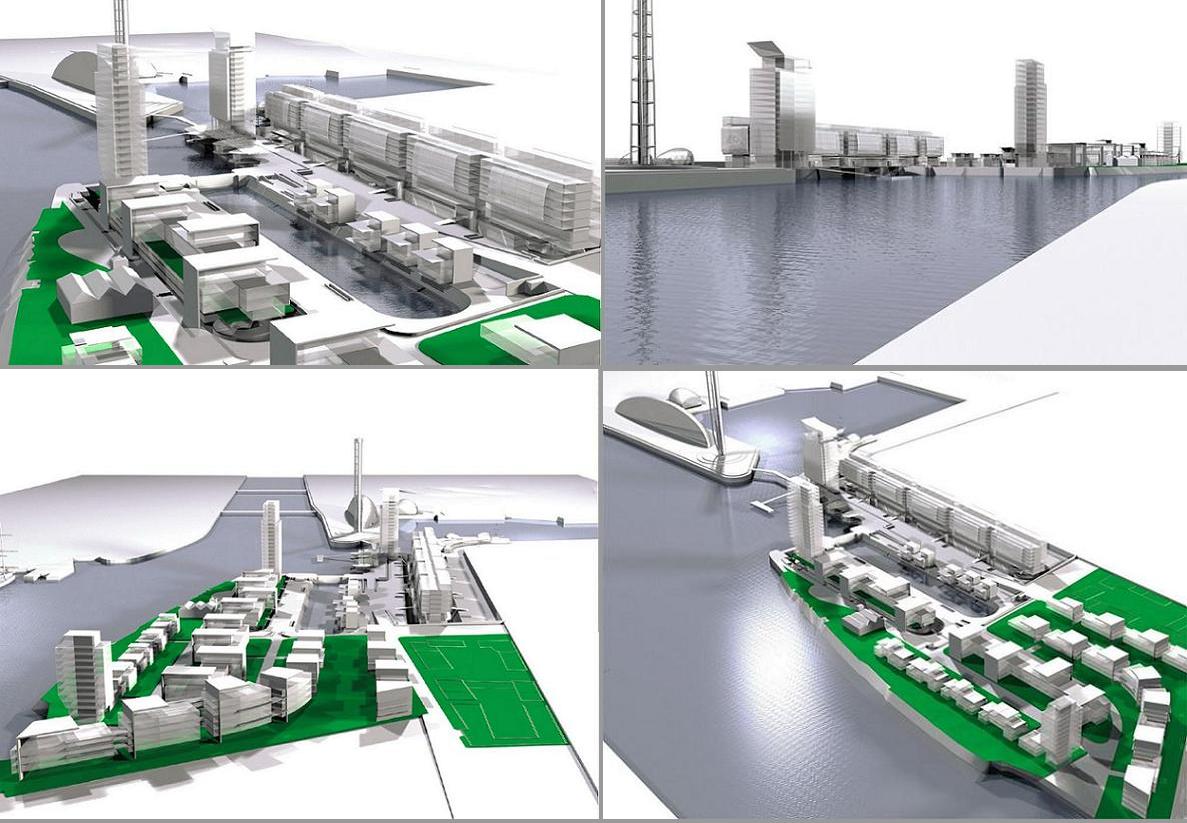
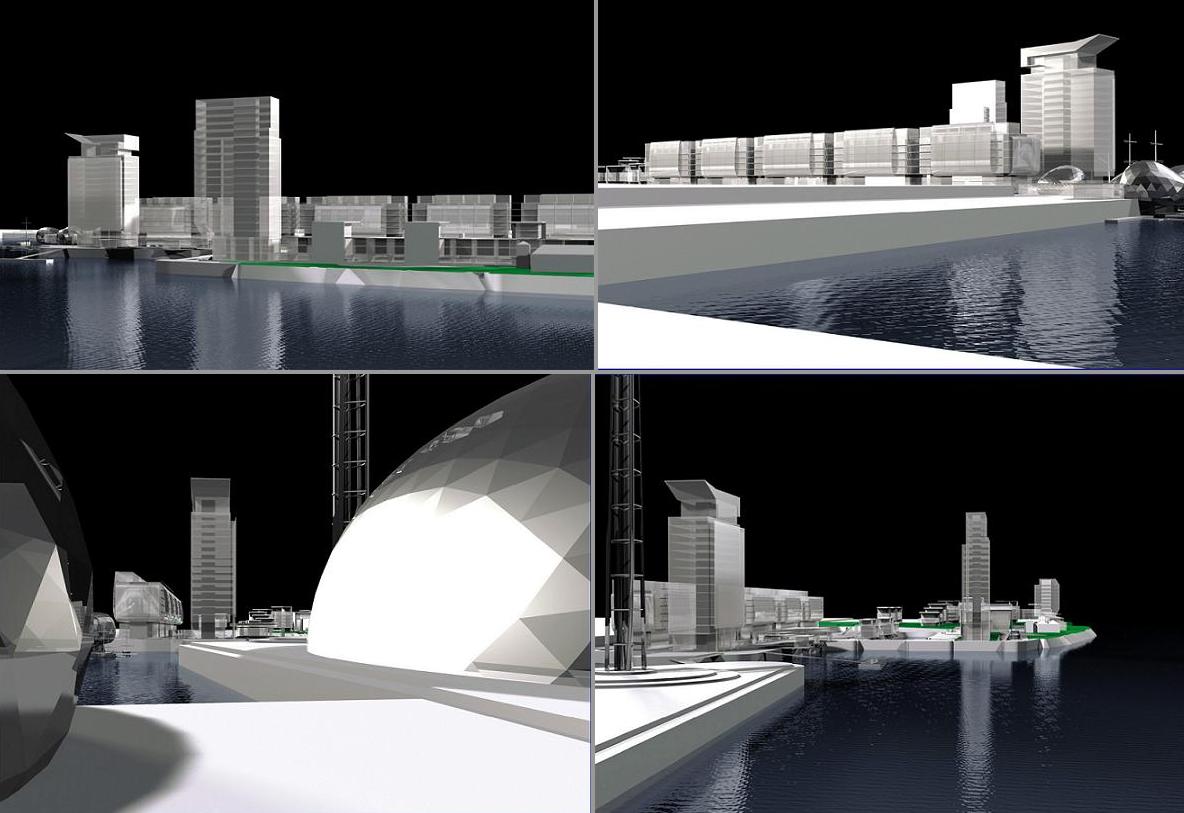
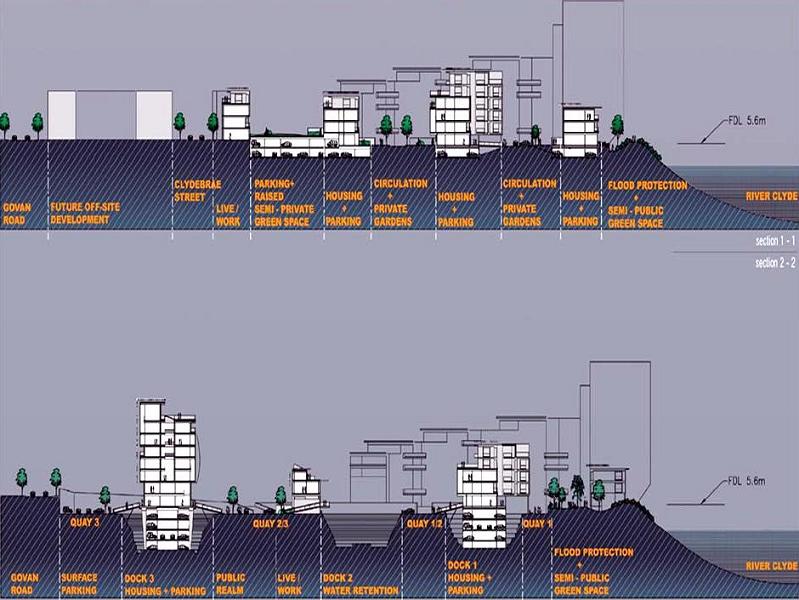
An intelligent residential scheme in Glasgow. Whatever next? A new pedestrian footbridge will connect the Science Centre to the docks along a linear park. The unique nature of the site requires parking to be split between silo spaces in two reclaimed docks (the third will be kept as a water feature) and split level undercroft parking with planted roof. The riverfront will be refurbished to prevent flooding and provide public access, focussed on a new plaza. Cutting edge architecture in Govan? Believe. An extended gestation has survived loss of a hotel, but the site remains a tremendously awkward build, something of a ZM speciality. Anticipating some flesh on these bones.
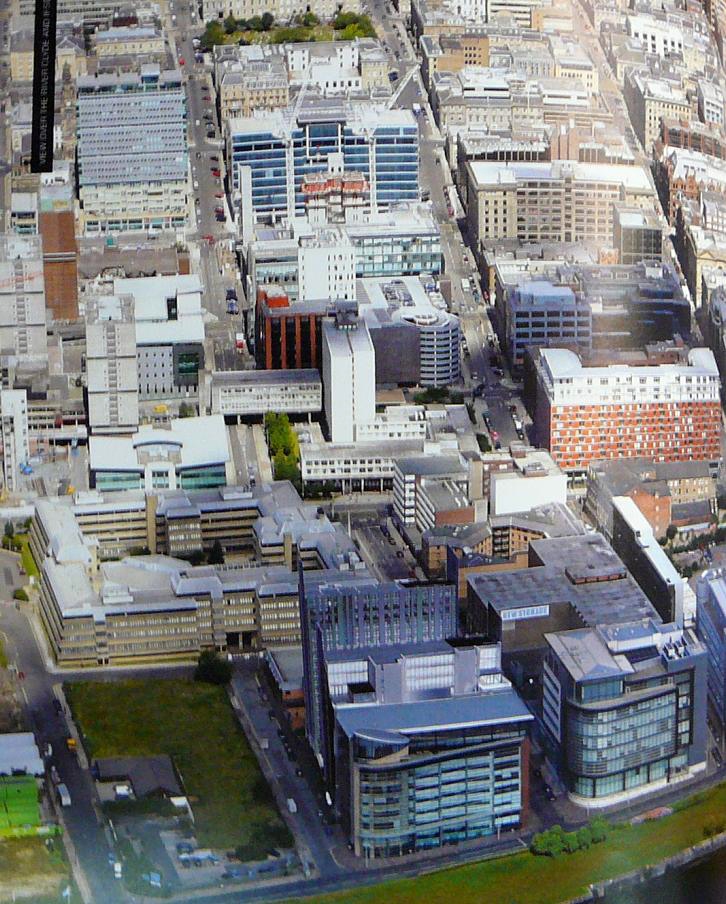
Clyde Street is on the front line of the present rush for the river. Apparent when you see the quantity of proposals jockeying for position along its length. Glasgow will possess a very different Clyde street (and a very different Clyde) come 2010.
Materials - Glass base, granite body with corten steel and powder coated aluminium penthouses
Usage - Residential, ground floor commercial
Height - 14 floors, 44m
Total Homes - 42
Cost - n/a
Location - 10-16 Dixon Street
Status - Approved
Start date -
Completion date -
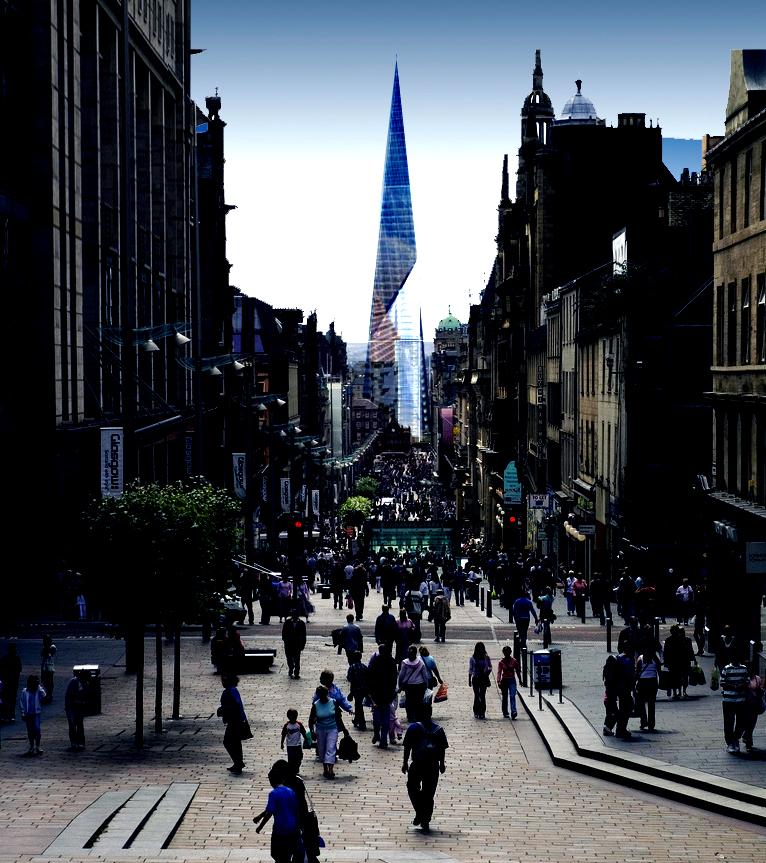
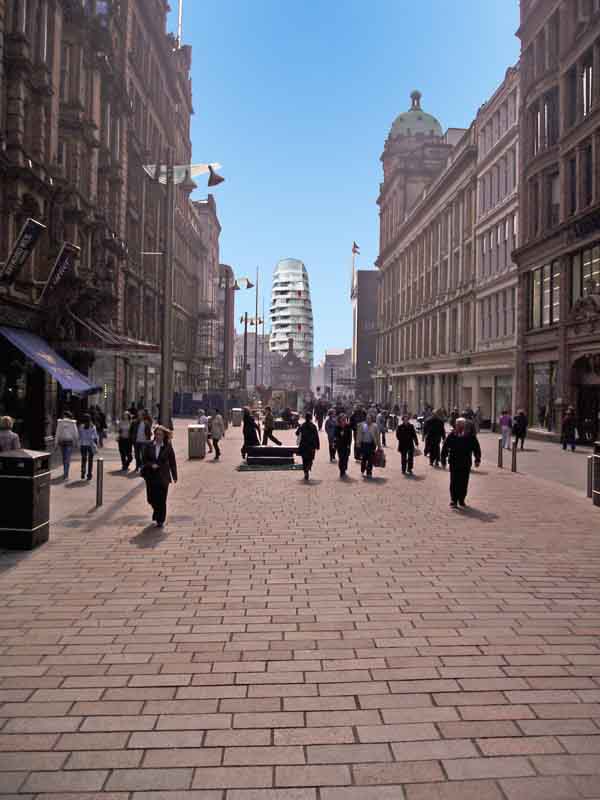
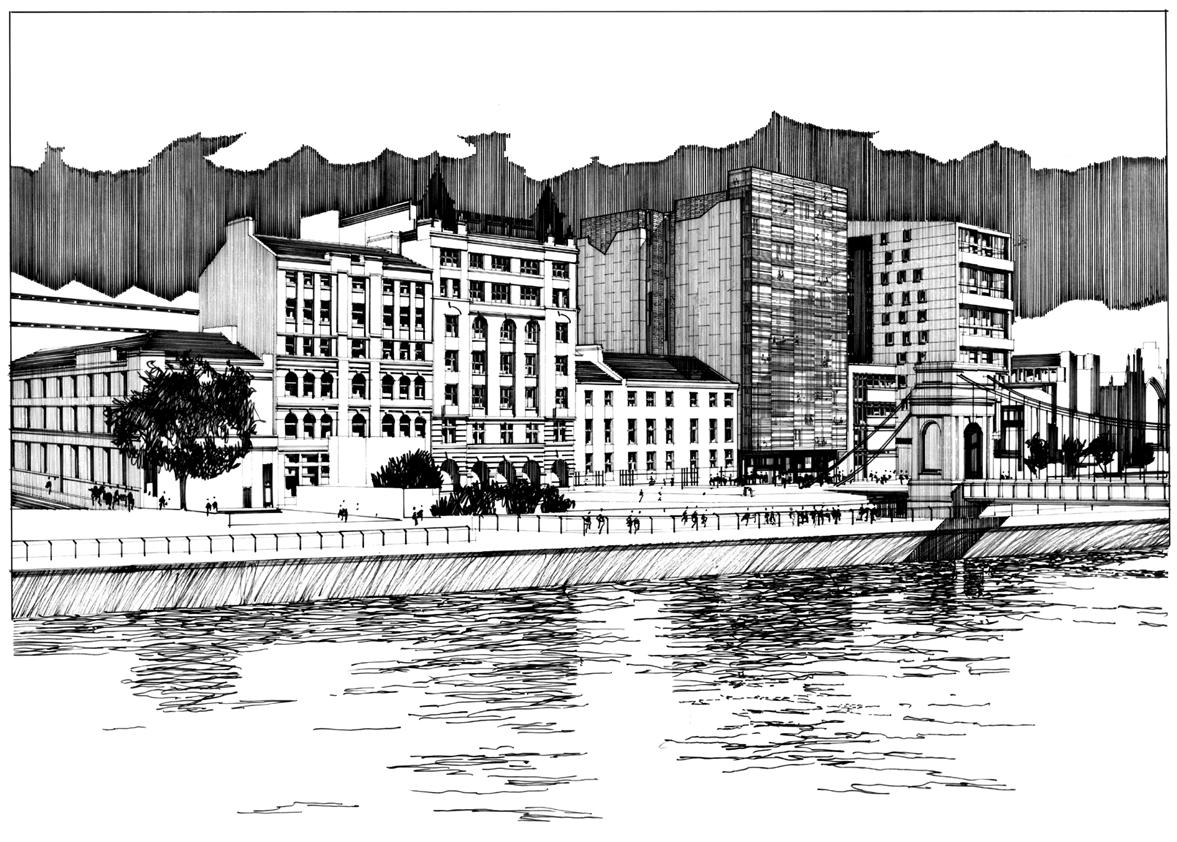
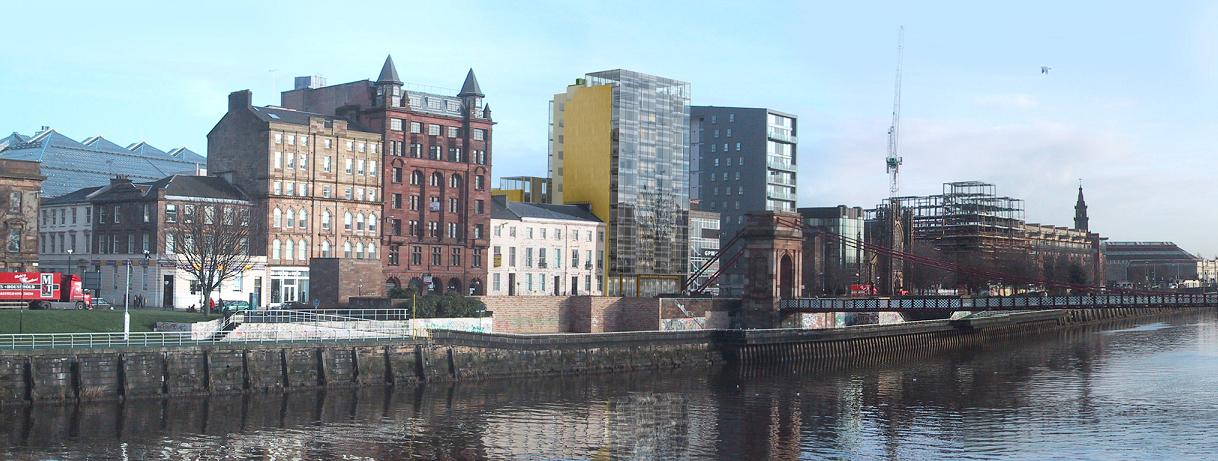
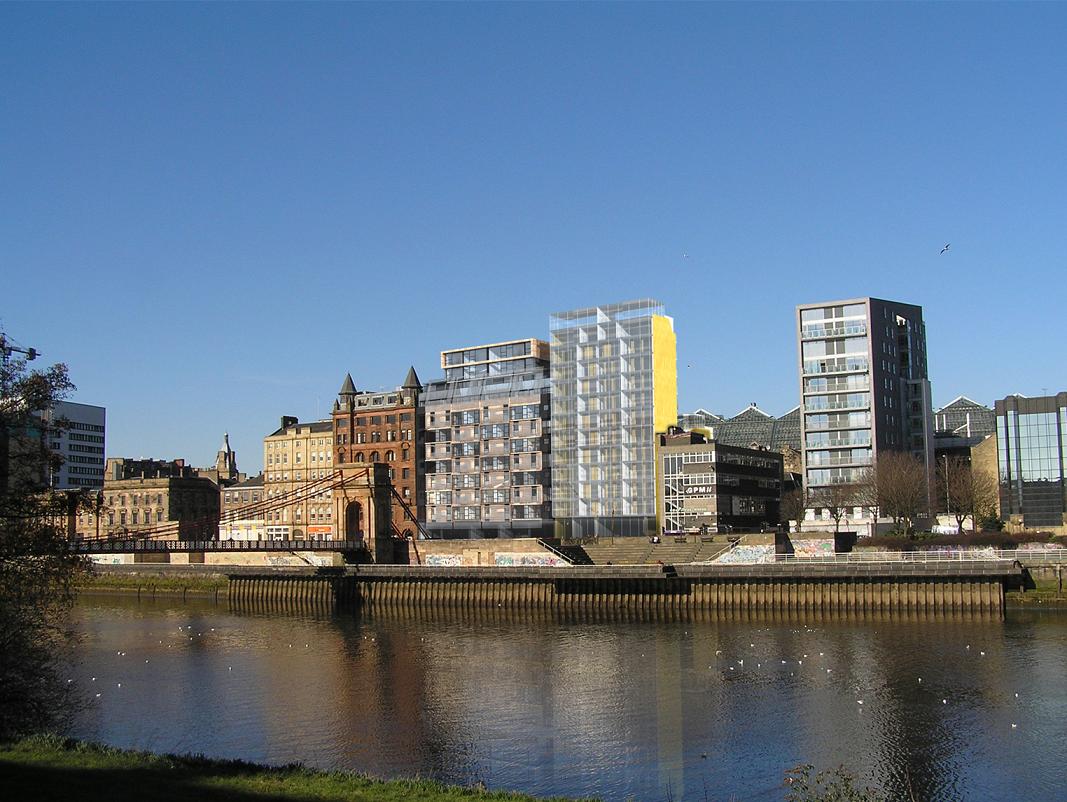
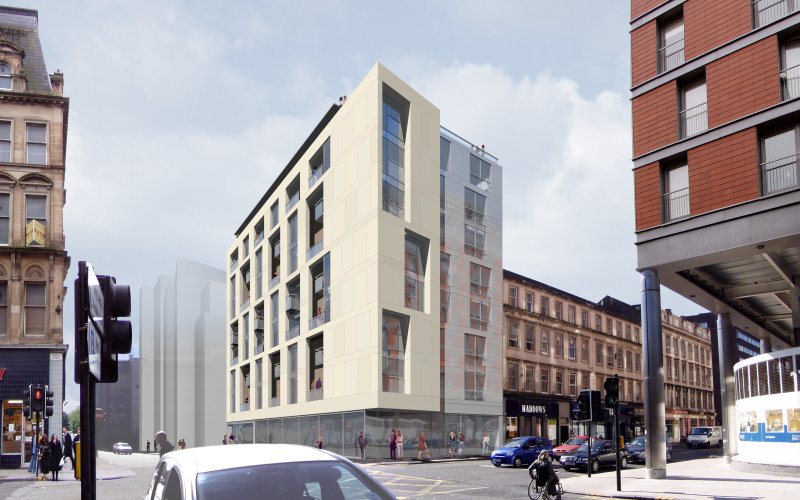
The development is read as 4 boxes, each with its own identity denoted by material, but linked as a whole by site and shape. This bold design succeeds in enhancing the vista down Buchanan Street and encouraging movement through Dixon Street. Visible in the background is Page and Park's Dixon Street Tower and Custom House Quay tower (also RMJM), taken together these will greatly contribute to the St Enoch areas renaissance. It is unclear whether adjacent massings on Howard Street represent successive phases.
Materials - Powder coated anodised aluminium panels and curtain walling
Height - 13 floors
Total flats - 53
Cost - £7 million
Location - 228-236 Clyde Street
Status - Approved
Start date -
Completion date -
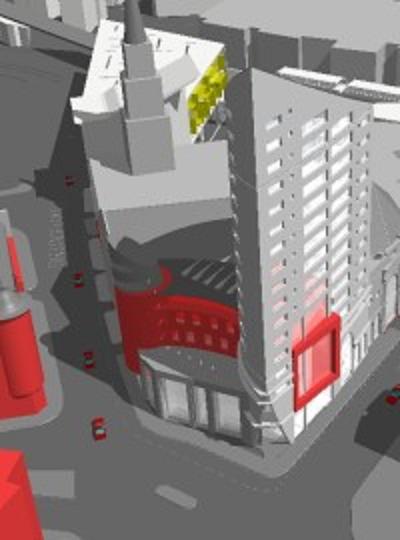
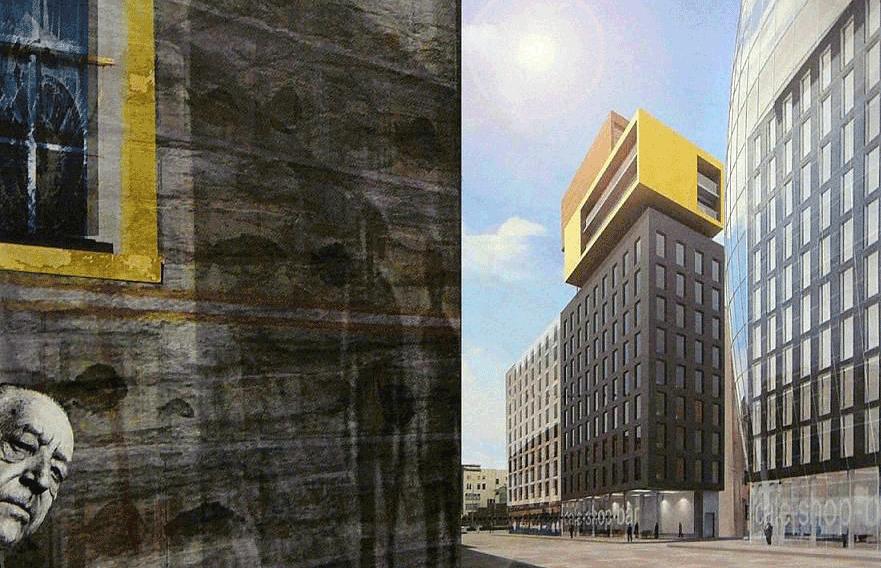
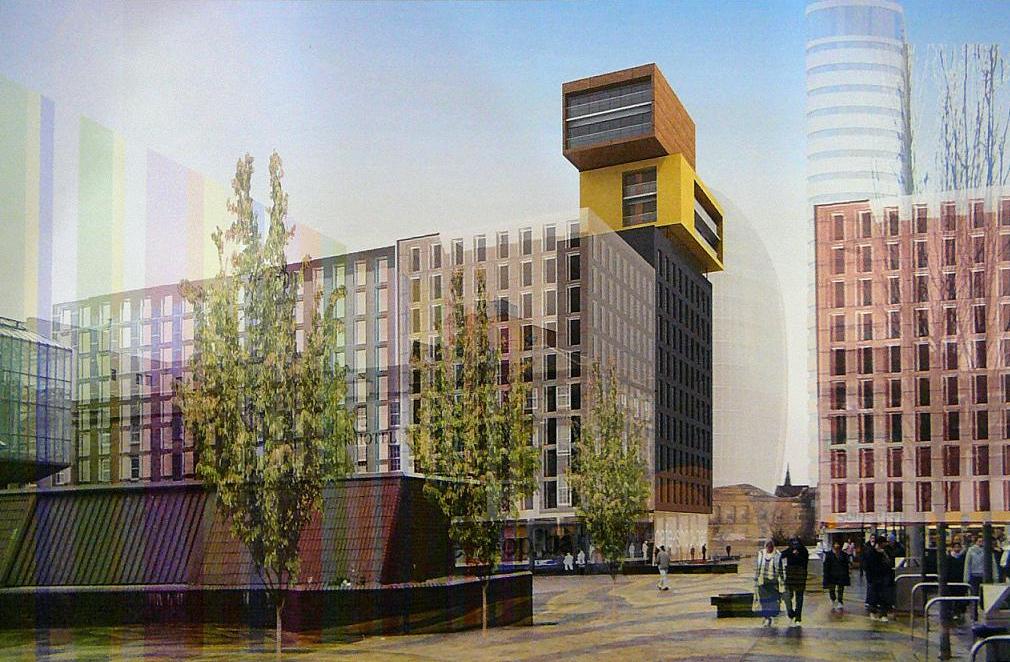
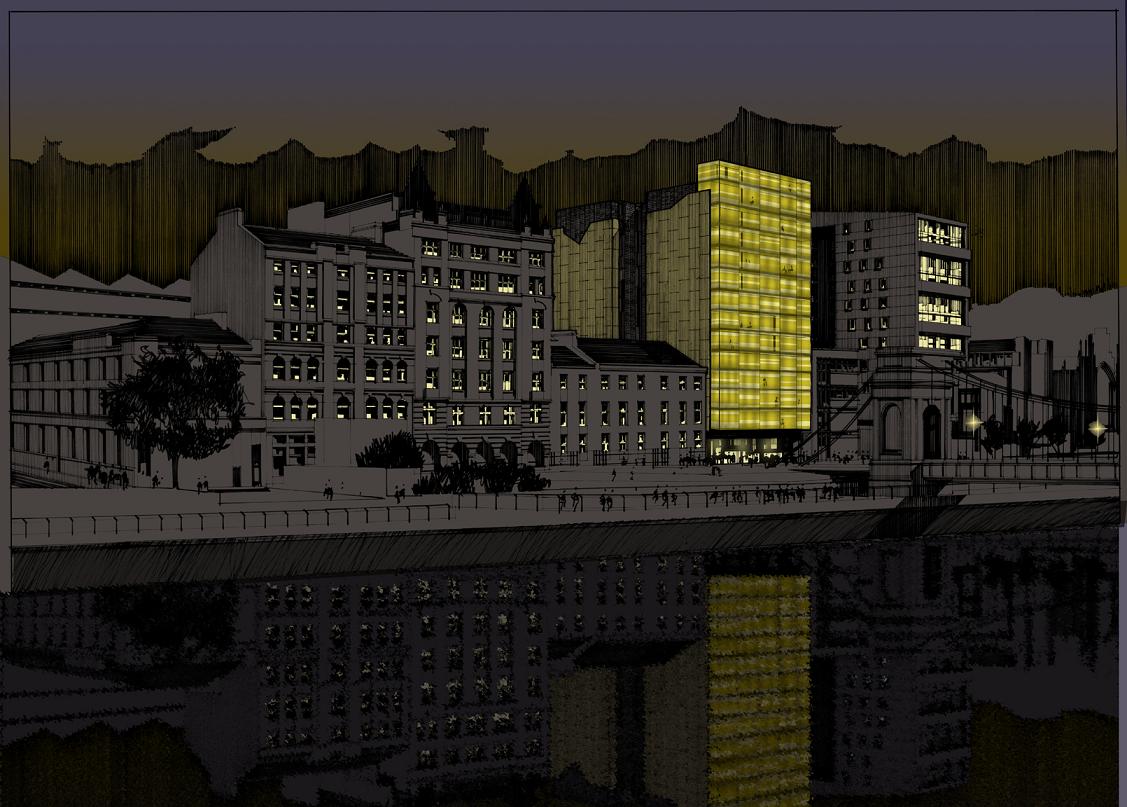
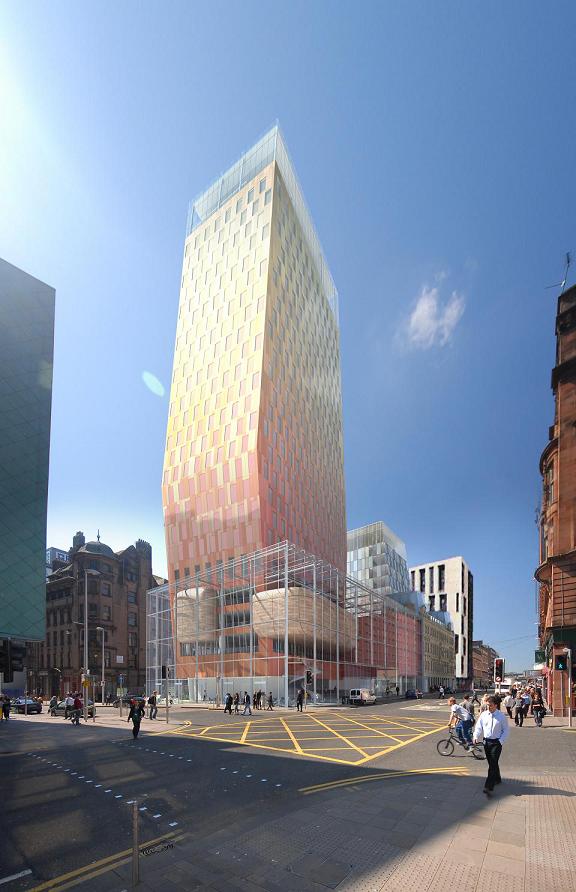
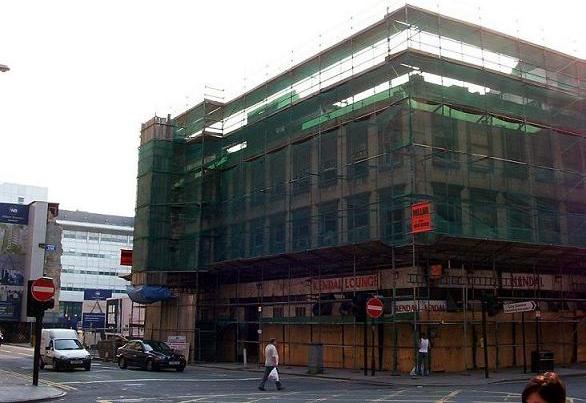
Demolition contractors are now on site at Unicorn. The development takes its architectural cue from the adjacent Icon building and Hans Scharoun's Berlin Philharmonic concert hall, the characterful gold gables are clad in powder coated anodised aluminium panels and the front facade has frits and colours resembling a large artwork delivering spectacular night lighting, something of a gm+ad speciality. The future Dixon Street tower will rise on the site of 3 storey tenement left and the architects
Clyde View Hotel is sited immediately adjacent.
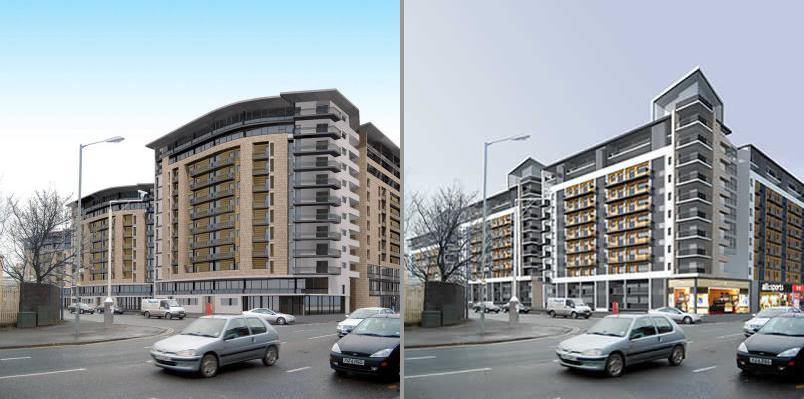
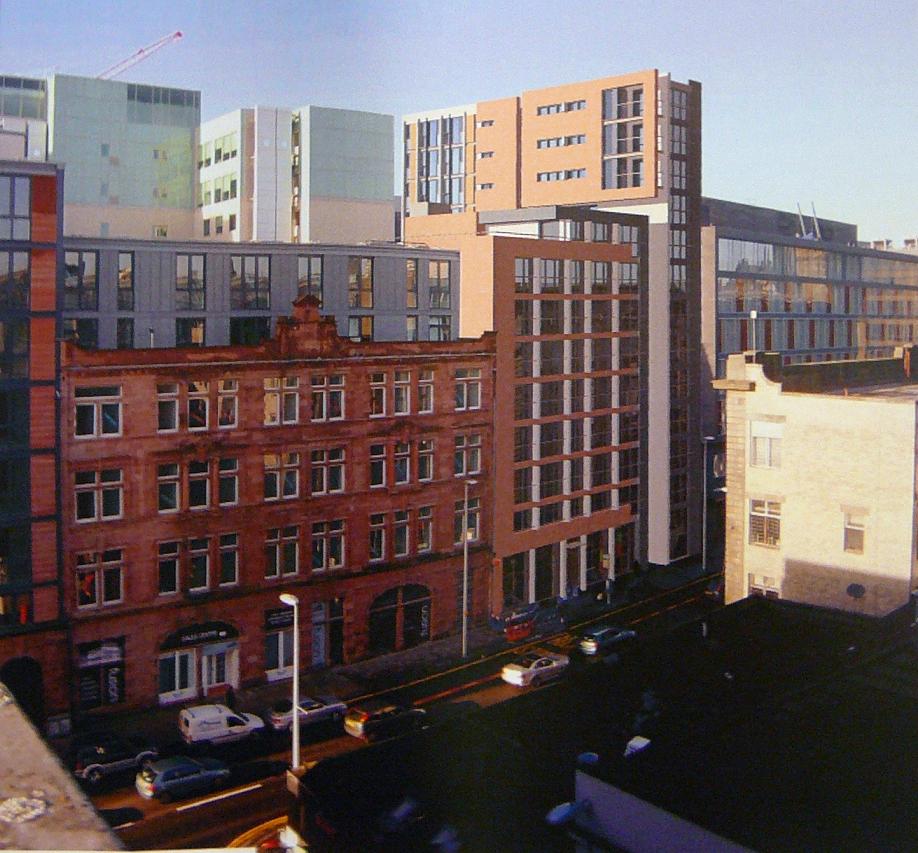
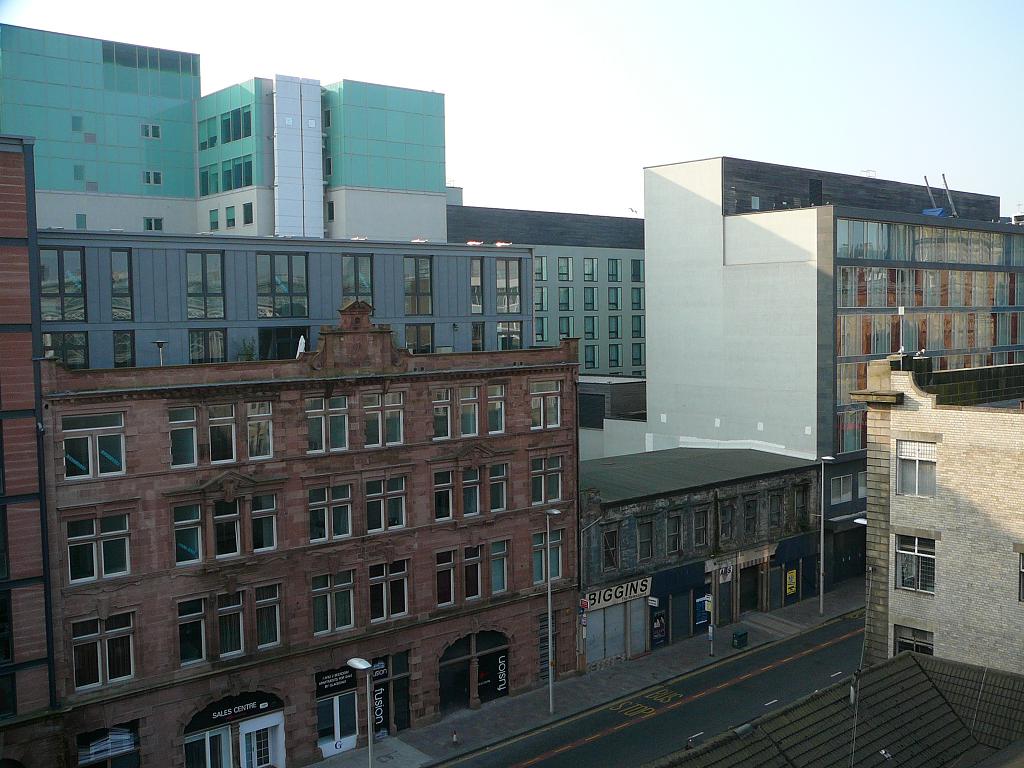
Situated opposite Evolution House this development splits into "block" and "tower" elements, the latter bookends the site maximising advantage of a southerly aspect whilst the low rise element defers to Fusion. Materials and cornice line respect adjacent development while the penthouse steps up in height to align with the Radisson facade. Proportions are enhanced by contrasting use of vertical and horizontal bands of sandstone and slate, blurring distinction between two disparate halves. White tiled walls to the courtyard are intended as interpretation of the tenement close with a dual function of reflecting sunlight downward. The development is car free.
Materials - Natural stone, pre-patinated zinc, aluminium and coloured render
Total flats - 73
Cost - £4 million
Location - 351 Argyle St/45-47 York St
Status - Proposed
Start date -
Completion date -
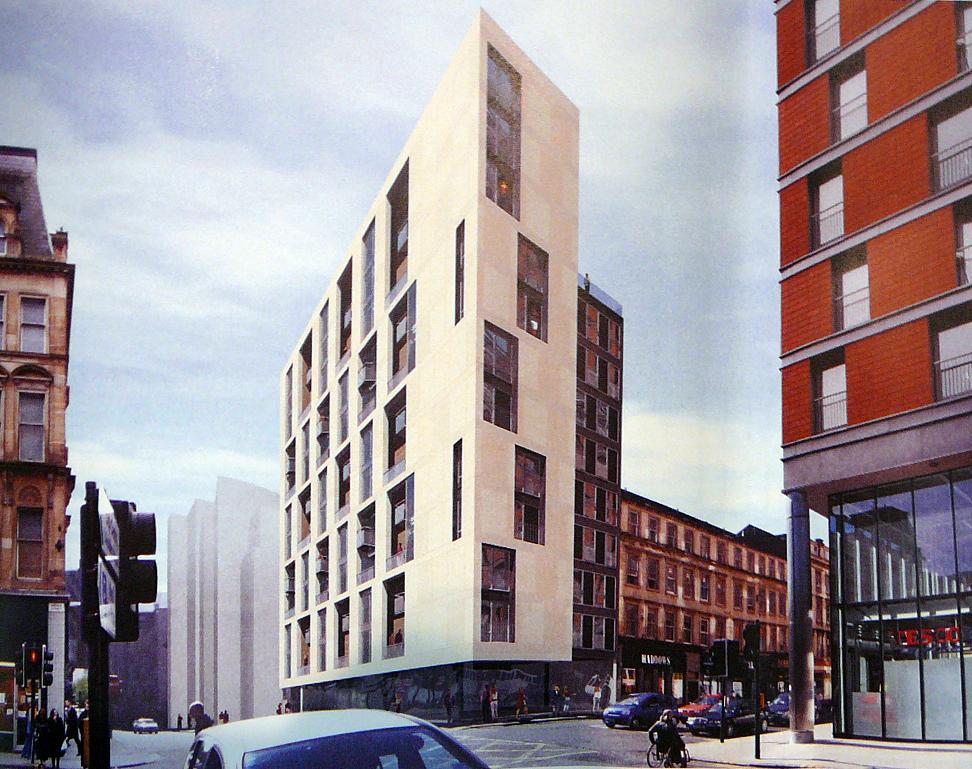
The building is composed of a formal repetition of two storey masonry recesses to bookend York Street, with an aluminium wing to Argyle Street. Ground/basement commercial/retail uses are provided. Atlantic Square is visible in the background, with The Bridge facing across Argyle St.
Materials - Natural Stone and aluminium curtain wall
Cost -
Location - 47 Old Wynd/100 Osborne Street
Status - Approved
Start date -
Completion date -
The South elevation is vertically halved to accentuate slenderness, the set back penthouse is designed to give appearance of gradation in height from the east. The build incorporates ground floor commerce and basement parking, a successive phase is envisaged for a plot to the immediate west. The site borders St Enochs East Casino.
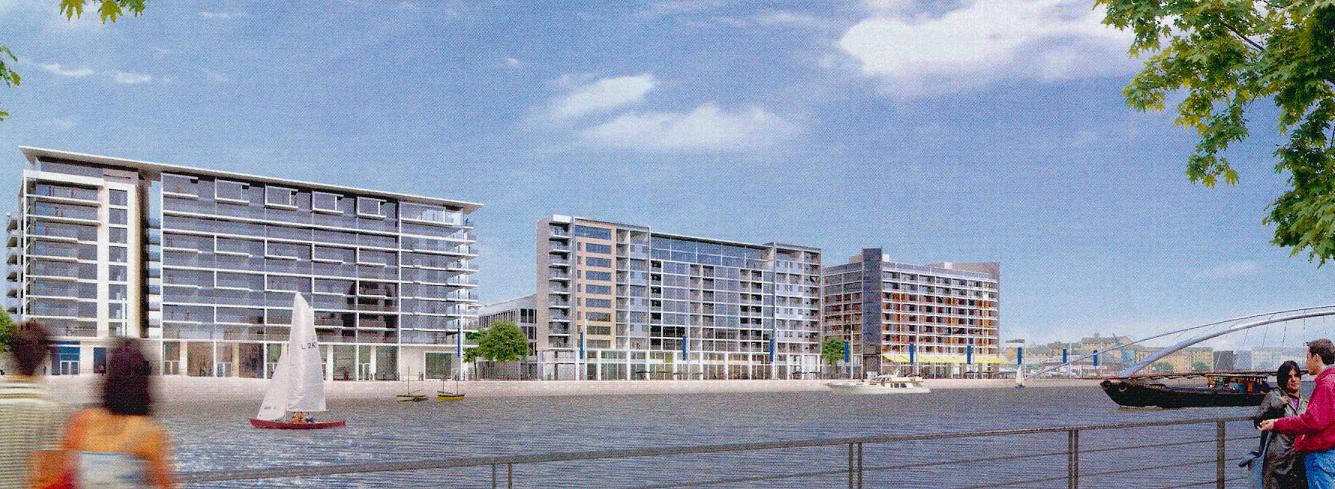
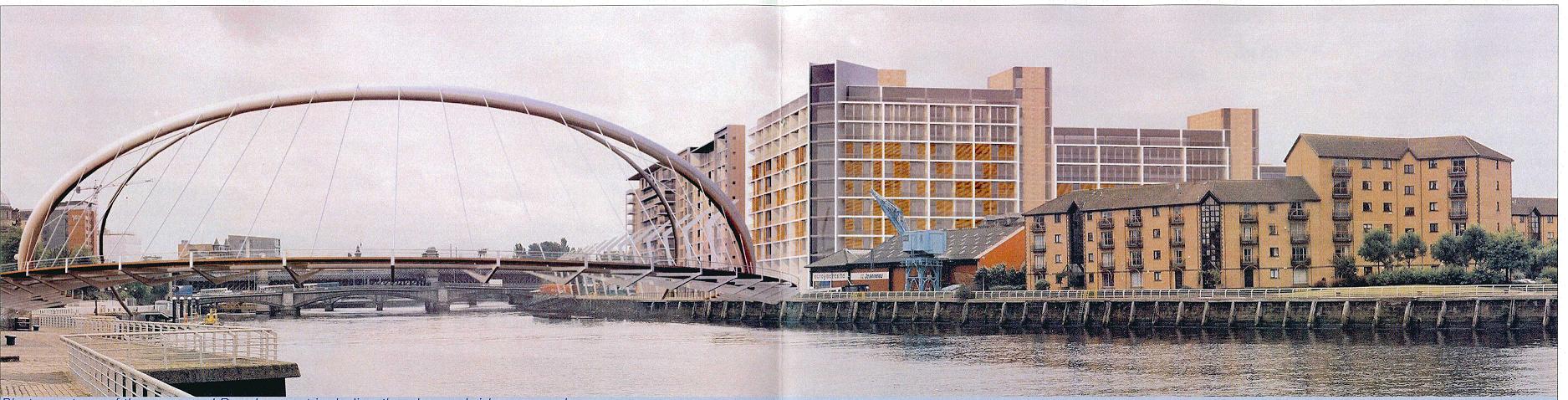
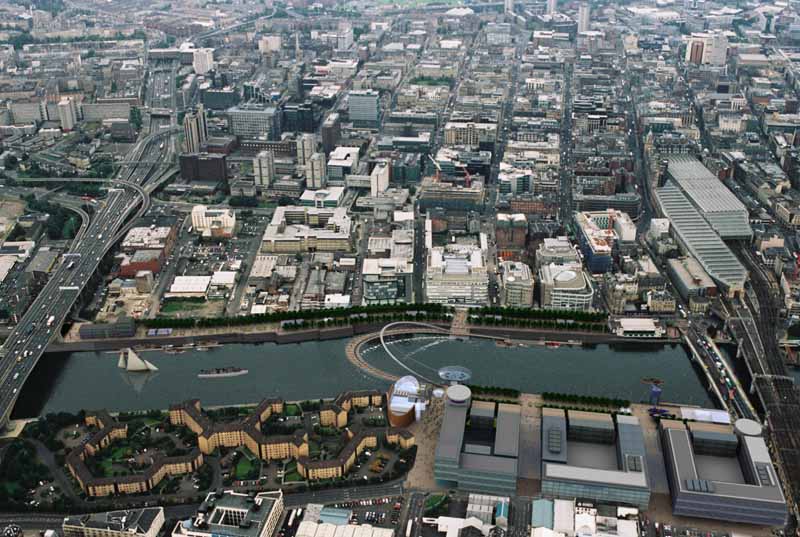
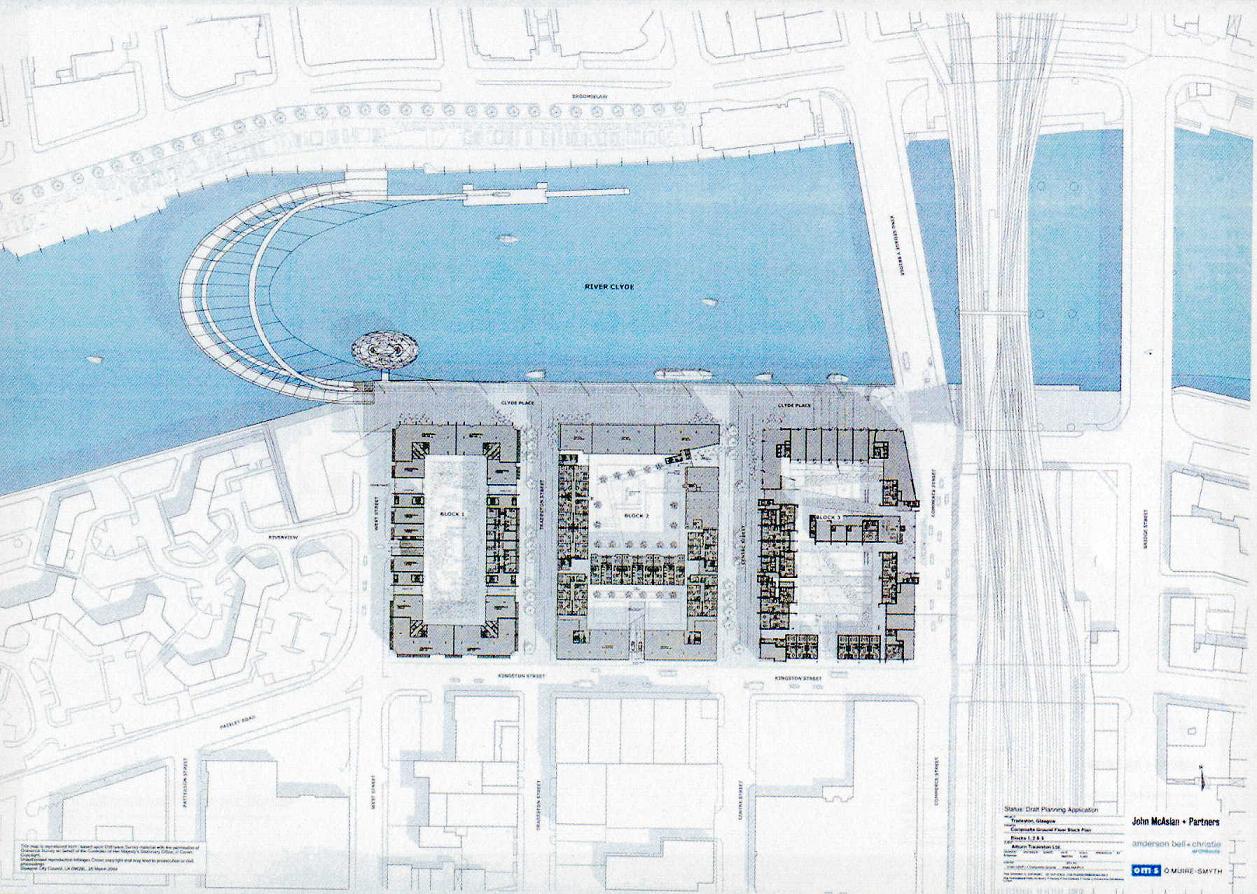
Location - Clyde Place/Commerce Street/Kingston Street/West Street and Centre Street
Status - On hold
Start date - Spring 2009
Completion date -
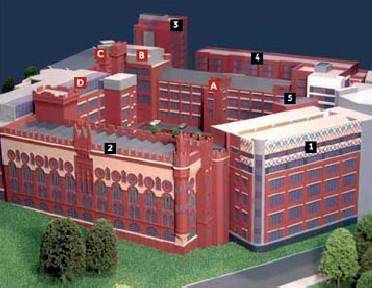
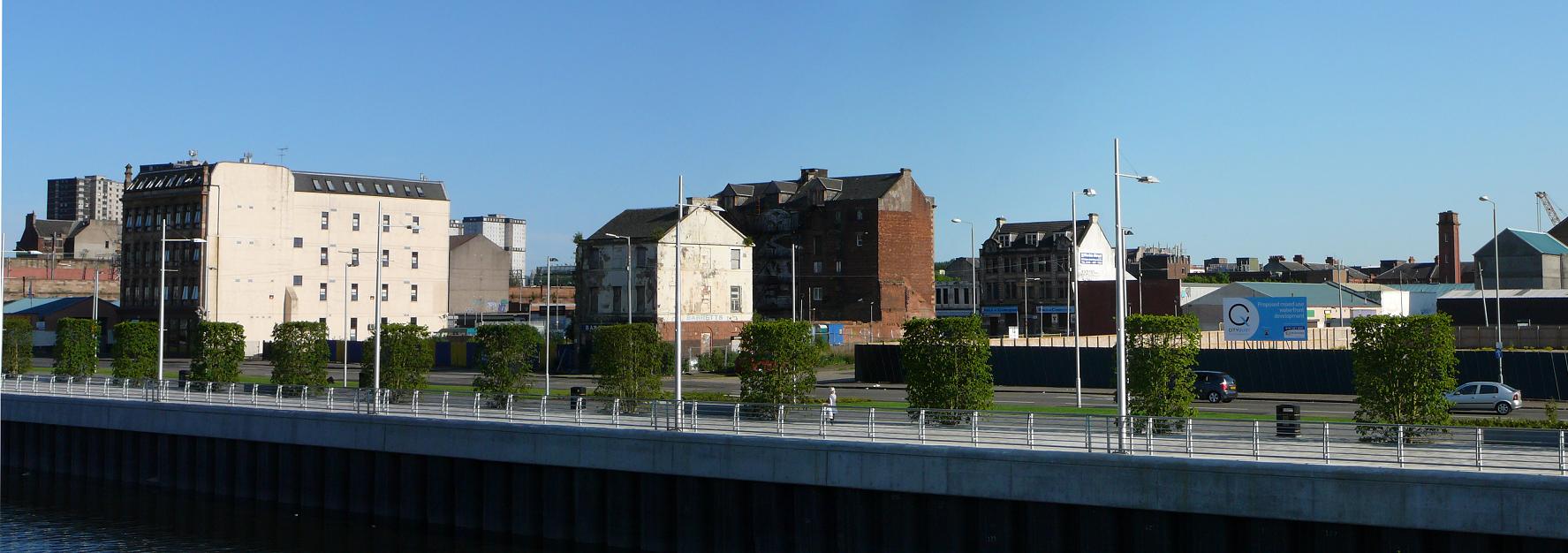
Subject to a revised planning application whereby housing density will be increased by 64 homes. The development was originally intended to be linked to the city centre by Neptune's way, this has been scrapped due to cost overruns favouring a new cost effective design. The scheme incorporates basement parking with sports/recreation facilities in the courtyards of blocks 1 and 3. Far future plans for possible tower to complement current Tradeston regeneration. The tower would rise on the site of suburban housing to the west.
Opinion
The central Anderson Bell Christie block lacks the lightness of touch shown in the earlier glazed design though not as a cost saving measure, that's all sandstone, reminiscent of the Merchant Building. The blank wall protruding from the O'Muire Smyth block is unconvincing and the roof no longer extends over the pedestrian access below overhead walkways, which looked to be the original designs strongest feature, a contemporary reworking of the city centre wynds akin to Butlers Wharf. There is a disappointing symmetry of height, tower elements would enliven visual appeal but I concede towers would be better suited to sites deeper in land such as the Tradeston tower or nearer to the Kingston Bridge rather than have the river crowded out by towers right on the banks ala Custom House Quay.
There are four structures of historic value encompassed by the site:
King George V bridge : Grade B listed A portion of granite siding will be removed from the bridge to accommodate a realigned Clyde Place.
Kingston House : Grade B listed Building will be maintained minus the mansard roof which will be replaced by a lightweight penthouse structure. (The roof has previously been substantially altered).
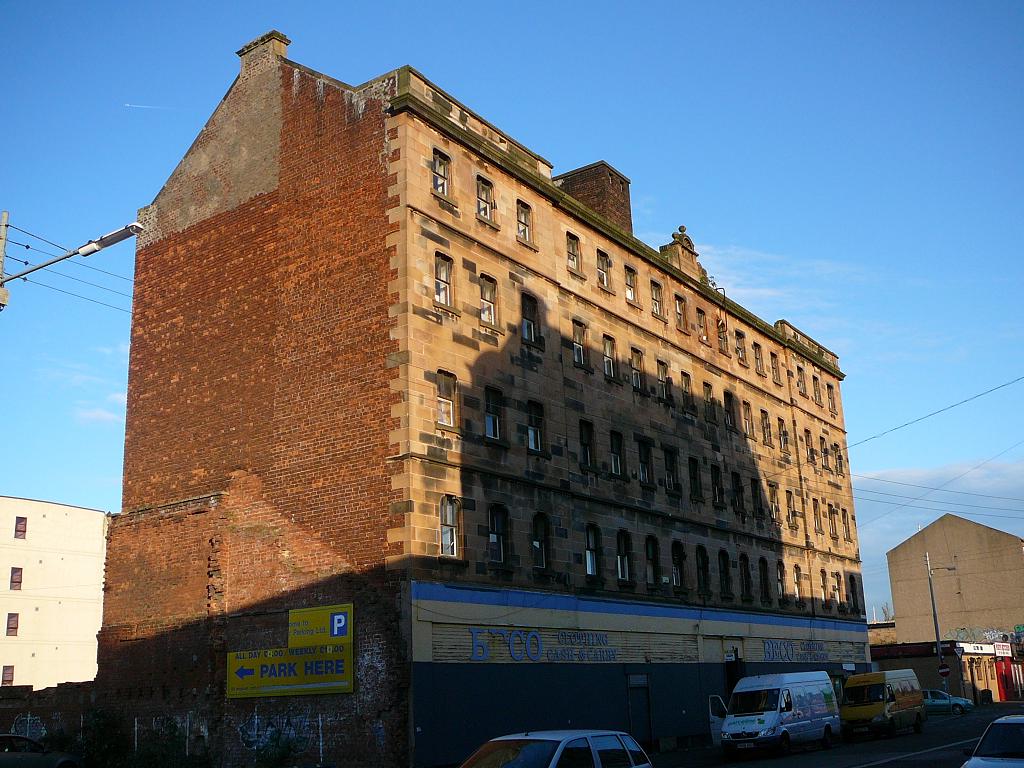
Beco building : Grade B listed To be demolished.
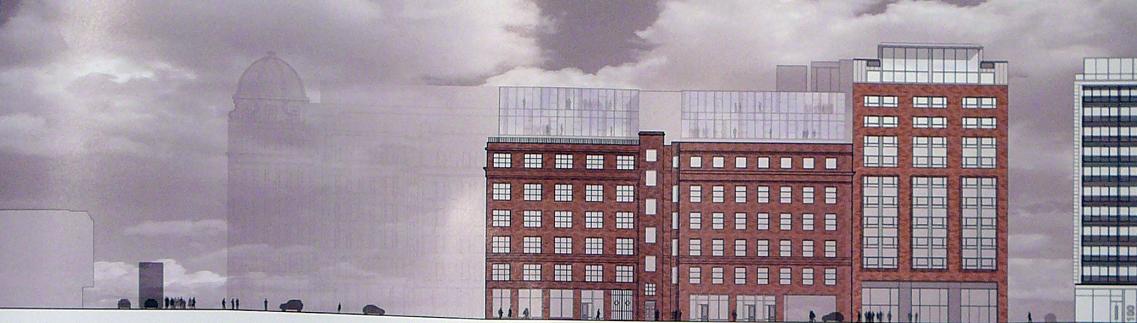
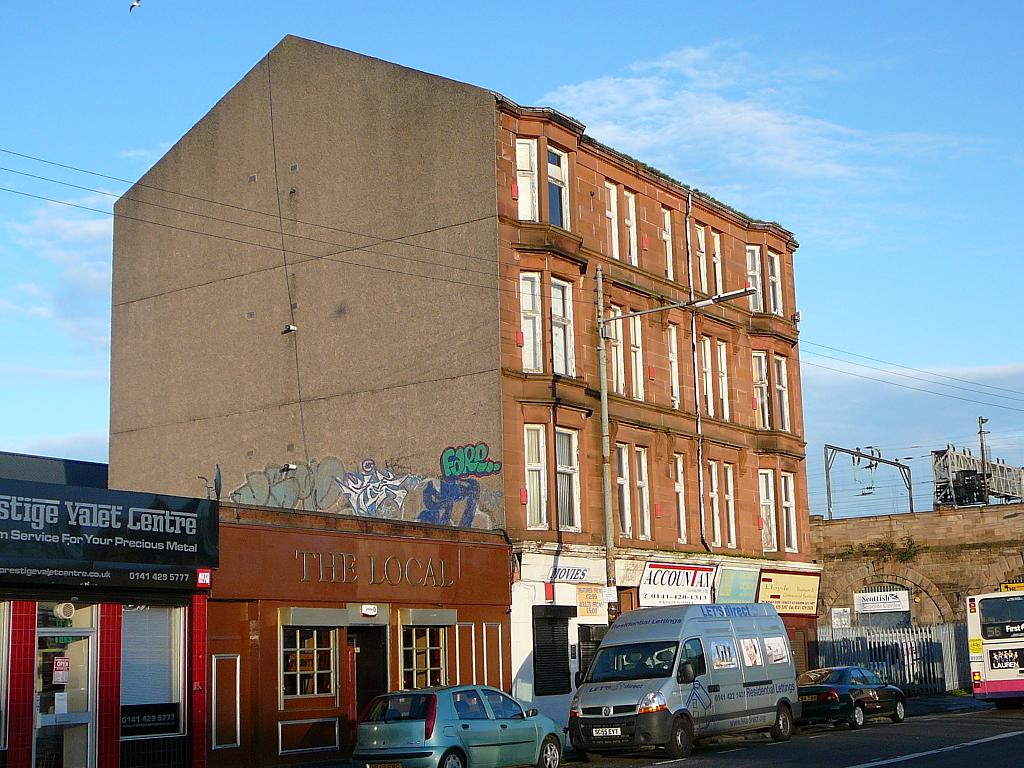
Kingston street tenement : Grade C listed To be demolished. Regency Homes and Five Architects 42 home residential has been subsumed within the wider Clyde Place redevelopment. The design responded to the historic warehousing of the Tradeston district, principle facades are laced in grid of stonework, with regular symmetrical windows. This muscular angularism respects the rectilinear street pattern.
The loss of the two listed buildings is to be regretted and will negatively impact upon the scheme, though not catastrophically so. The significant loss is the Beco facade it is a great piece much less orthodox than Kingston House and has great presence. Should have been retained. The Edwardian tenement on Kingston street is typical, but nothing more than a forlorn stump now and I question its streetscape value.
What the scheme does achieve is to redress the urban imbalance between north and south banks with an above average specification, McAslan's block in particular has an interesting profile. The ensemble will go a long way to reurbanising the city centre hinging on a relandscaped Clyde walkway particularly with road traffic diverted to Kingston Street, although the developer would have done well to afford additional metres of width.
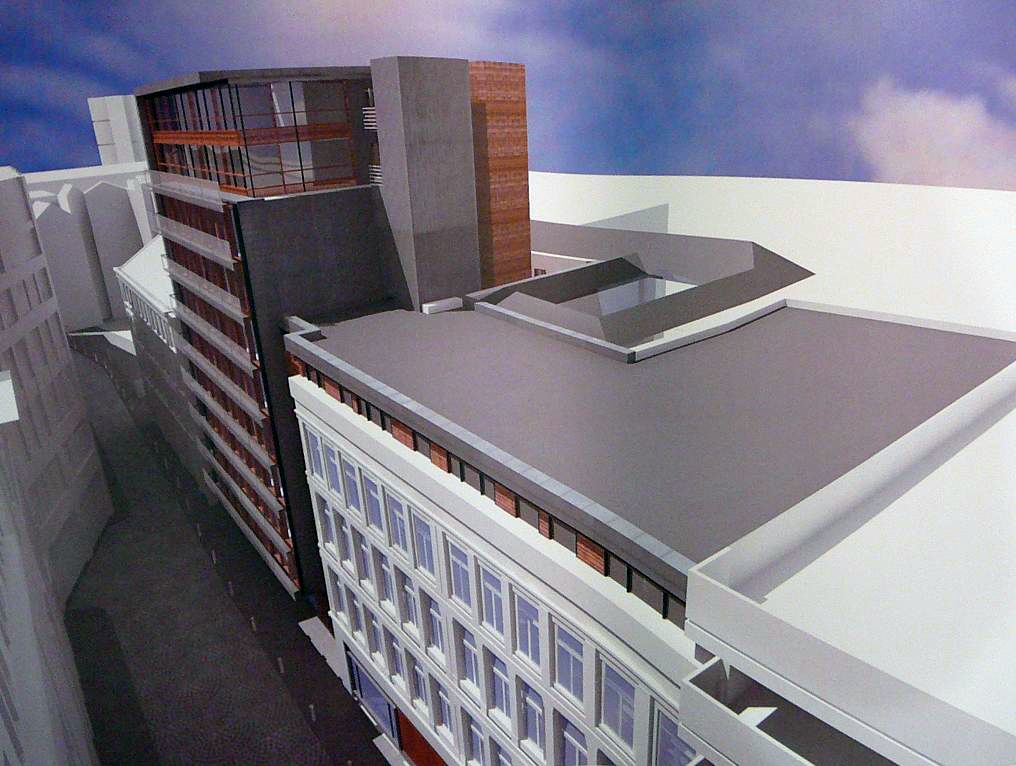
Vienna Apartments : Published 22/11/07 Official site
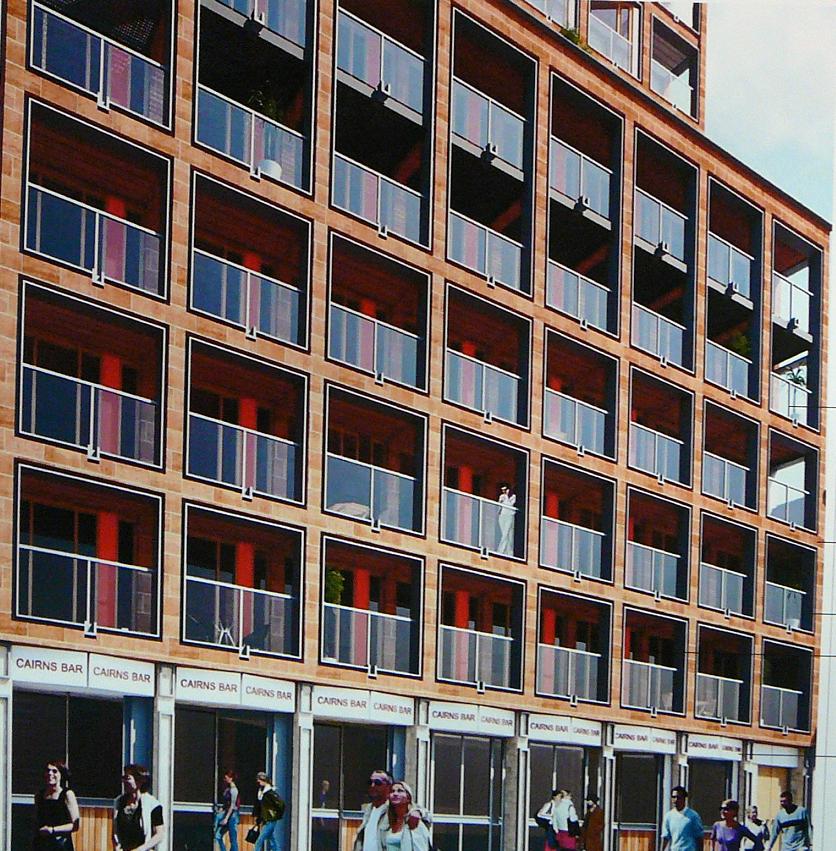
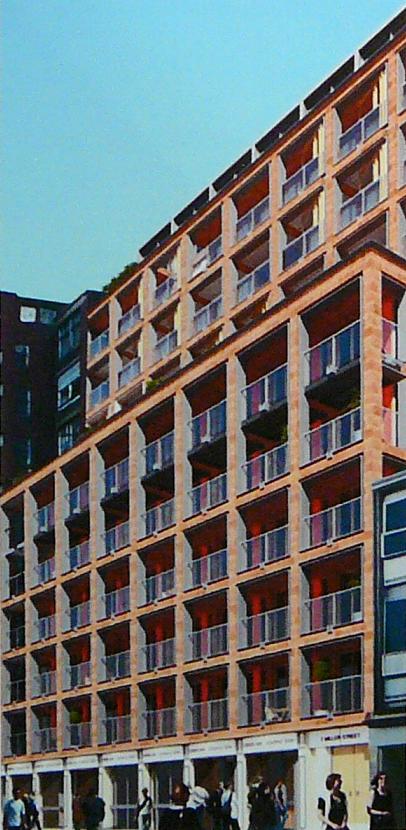
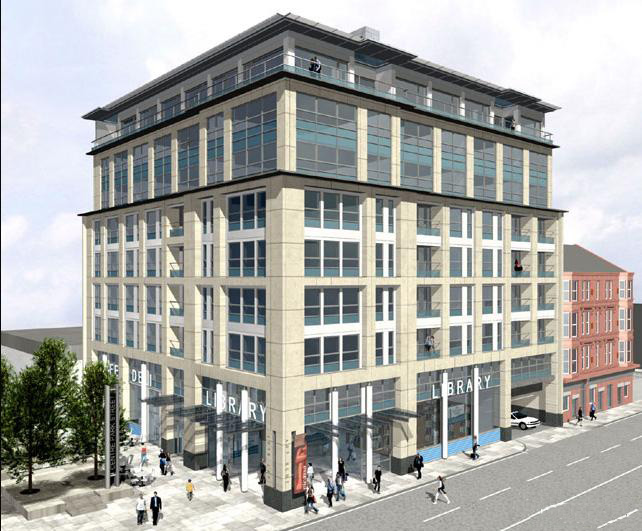
Materials - Sandstone & dip coated glossy red panels
Height - 10 floors
Total flats - 28
Cost - £6.5 million
Location - 5-7 Miller St
Status - Proposed
Start date -
Completion date -
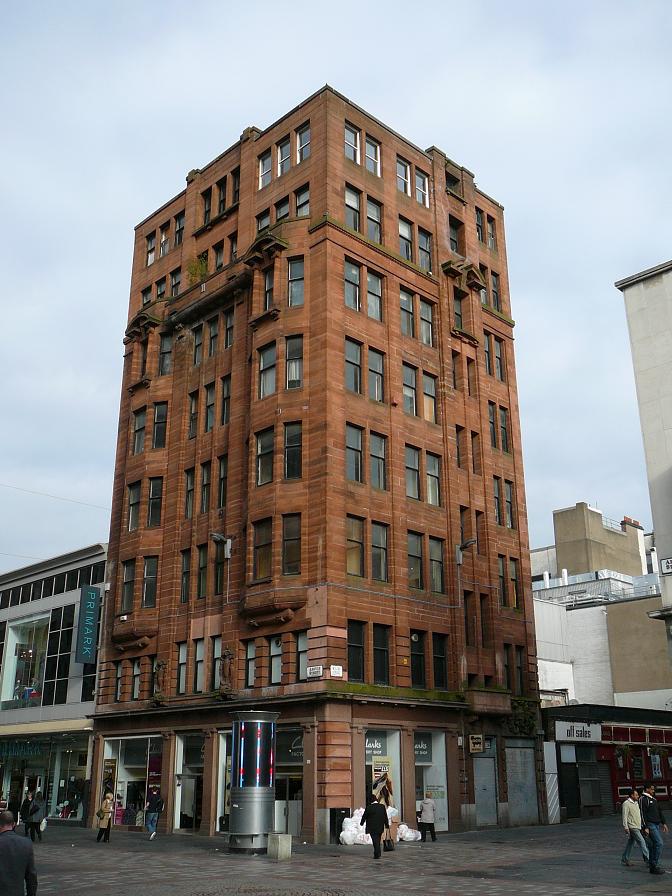
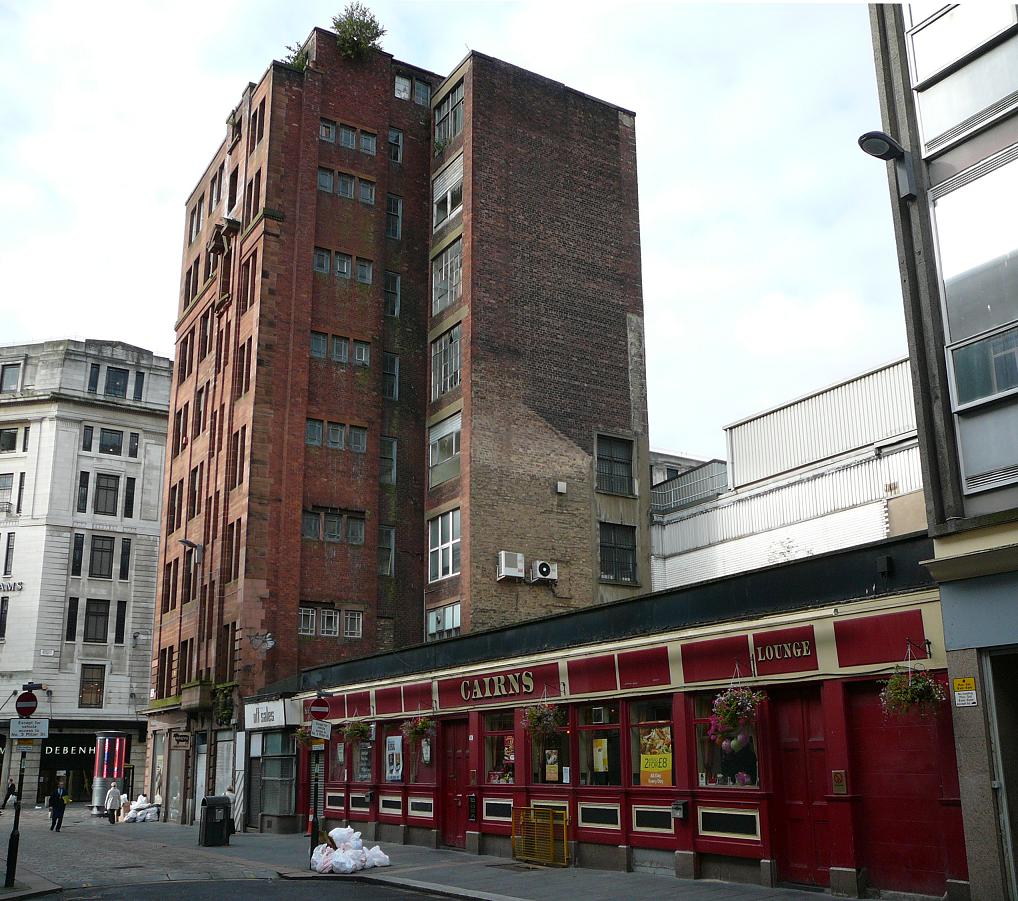
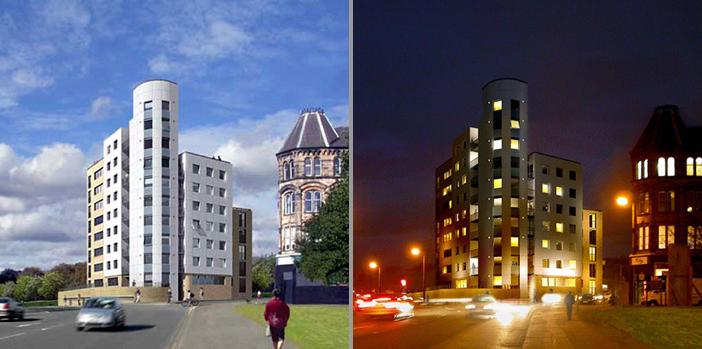
Cairns Pub is set to be demolished for new build replacement in an appropriately scaled bedfellow to the vertically accentuated American influence of its illustrious peer, no.3 Miller Street, a Grade B Edwardian warehouse from J A Campbell. Bulk is tempered by a series of set backs for a “layered” profile ensuring adequate light penetration.
 High-rise Residential Developments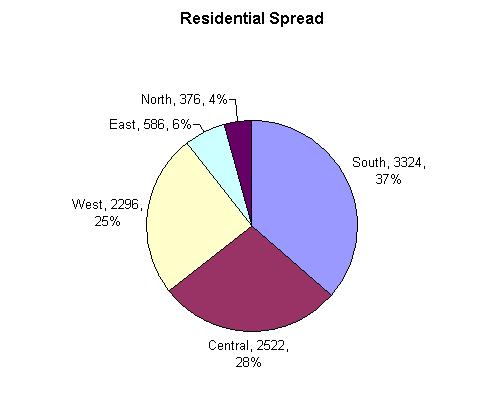
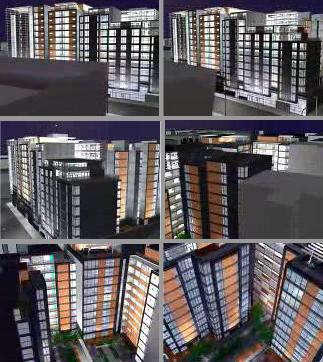

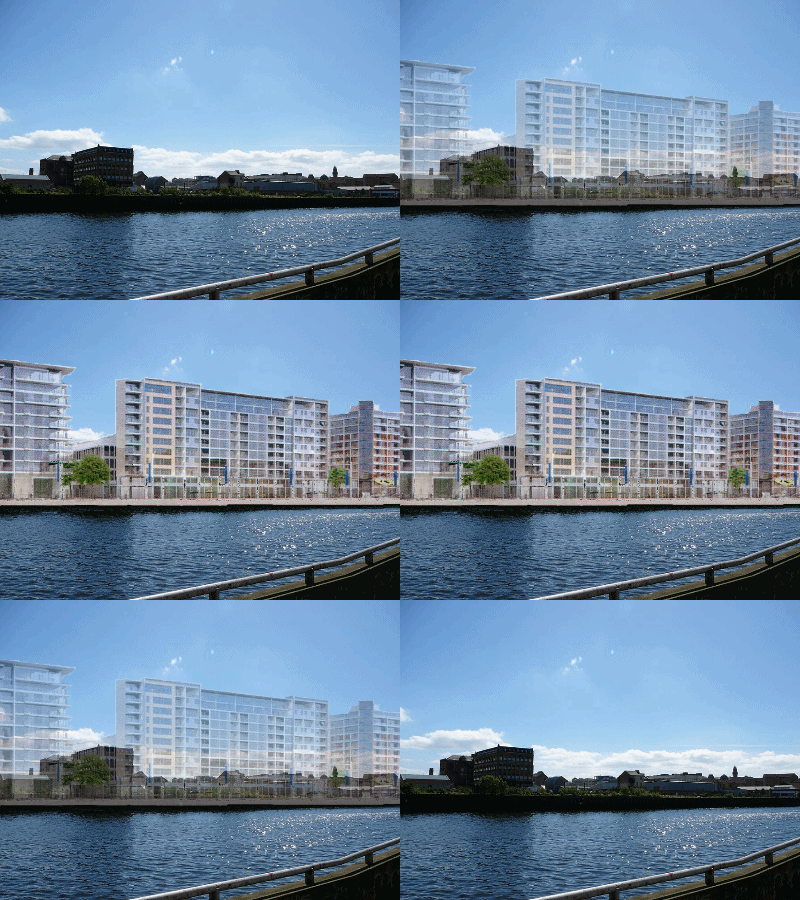
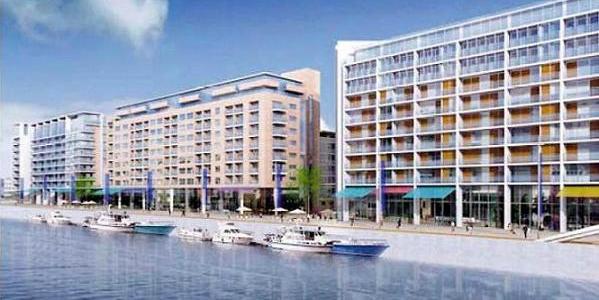
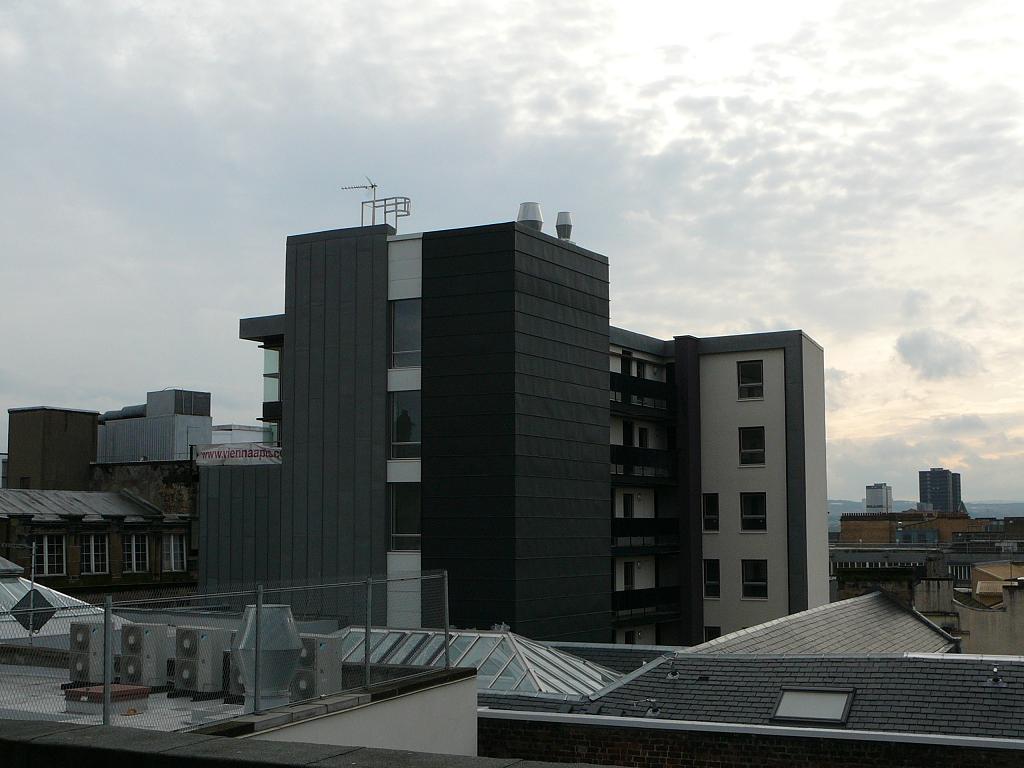
 Construction work has commenced at Vienna Apartments.